Best Places To Watch The Sunset In Aruba From Land And Sea
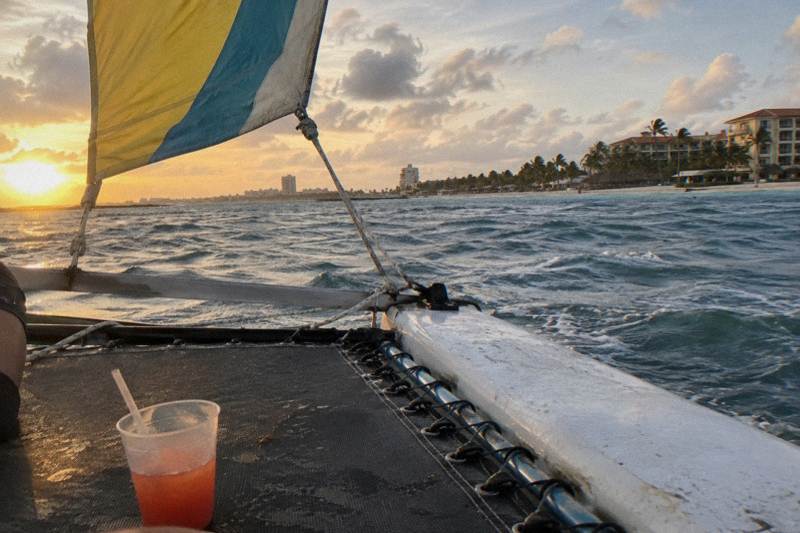
Aruba's west coast faces open water straight to the horizon, so the island has an unusual problem: too many good sunset spots. Here is how the beaches, the piers in Noord and the marina in Oranjestad compare, and when a boat beats the beach.
Short answer
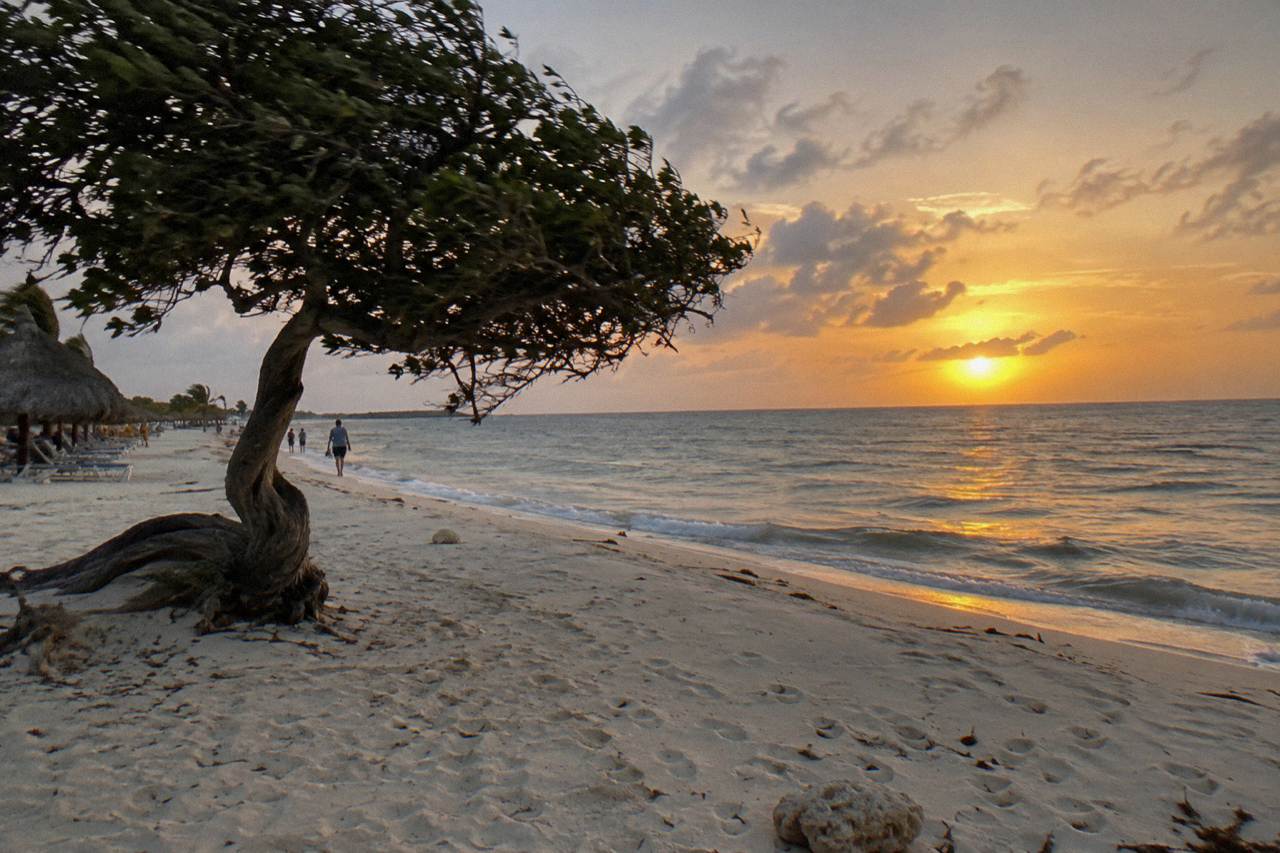
The best free sunset spots are Eagle Beach, Hadicurari and Malmok, all facing due west toward open sea; sunset runs from about 6:11 pm in mid-November to about 7:09 pm in mid-July. The piers in Noord add a boardwalk vantage, and a 2-hour shared catamaran sail from $59 per person turns the same sunset into an open-bar cruise.
Aruba sits just north of 12 degrees north latitude, with its entire developed coast facing west and southwest, aimed straight at the open Caribbean. That geography produces a sunset almost every evening of the year over water, and the island's rainfall averages just 451.1 mm annually, with mean sunshine of 3,410 hours a year. The result is a rare kind of problem for visitors: the sunset is reliable, but the choice of where to watch it is not obvious. Some evenings belong on a wide beach with a cooler, some on a pier bench in Noord, and some on the water itself, and this guide walks through all three.
For readers whose real question is whether a boat adds enough to justify the price, the short version is that the sea option is the upgrade: same sun, an open horizon, drinks included. The land options cost nothing and are genuinely good. Both are covered below, beach by beach and pier by pier, with the clock times and weather patterns that decide which one works on a given night.
Where Can You Watch The Sunset In Aruba Without A Boat?
The strongest free sunset spots are the west-facing beaches: Eagle Beach for width and parking, Hadicurari and Malmok for a quieter, more northerly angle, and the Palm Beach strip for the convenience of bars and piers at your back. All face open water, and all are public. The trade-off is crowds on Palm Beach and a longer drive to Malmok from the hotels.
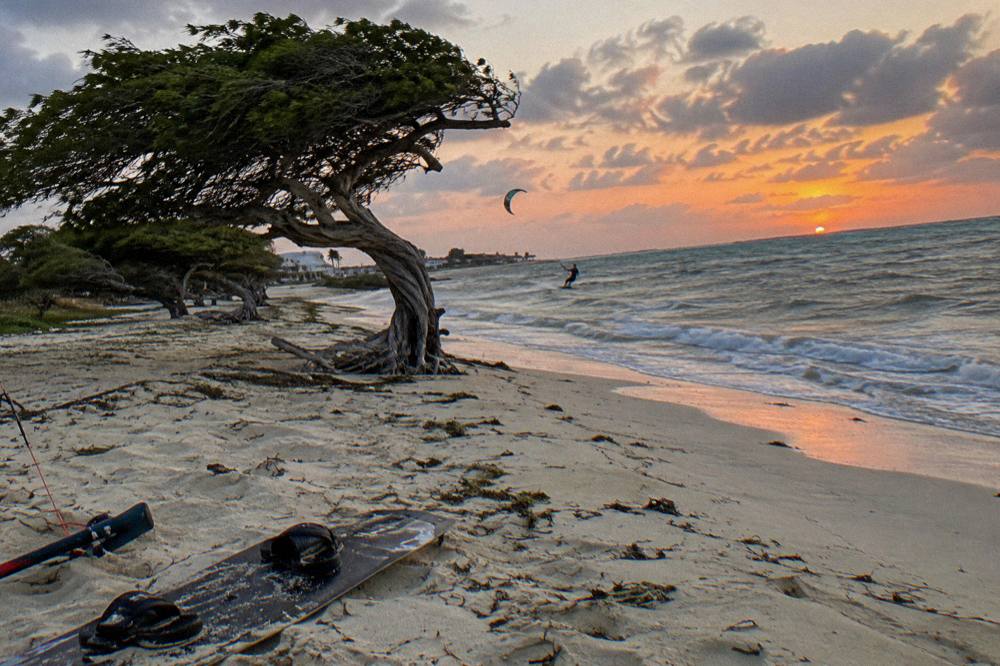
Aruba's leeward coast runs roughly north to south along the hotel zone, and every public beach along it looks west. That means the difference between spots is not the sun itself, which sets in roughly the same place every clear evening, but the foreground: Eagle Beach gives you fofoti trees silhouetted against the dropping sun, while Malmok and Arashi at the northern tip feel emptier and wilder, with kite surfers often still on the water as the light goes gold.
Timing matters more than location. Sunset on the 15th of the month runs about 6:33 pm in January, 7:09 pm in July, and 6:11 pm in November, a spread of roughly 58 minutes across the year, so a dinner reservation that works in July leaves you stranded indoors in November. For the month-by-month detail, see the guide to sunset times by month in Aruba.
One rule applies on every beach: Aruba bans sunscreens containing oxybenzone, a ban in force since 1 July 2020 covering import, manufacture and sale. If you swim while you wait, a mineral sunscreen is the compliant choice, and reef-safe habits matter even at a swimming beach because the same coast hosts the snorkel sites.
| Spot | Area | Character | Best For |
|---|---|---|---|
| Eagle Beach | Low-rise zone | Wide sand, fofoti trees, easy parking | Photographers, families |
| Hadicurari Beach | Noord, north end | Quieter, kite surfers, fishermen's pier nearby | Escape from crowds |
| Malmok and Arashi | Northern tip | Rocky coves, wilder feel, sunset over open water | A quiet last hour |
| Palm Beach strip | High-rise zone | Bars, piers, action | Combining sunset with dinner |
| Surfside Beach | Oranjestad | Local feel, near the airport approach | Cruise passengers, locals |
Which Beach In Aruba Is Best For Sunset?
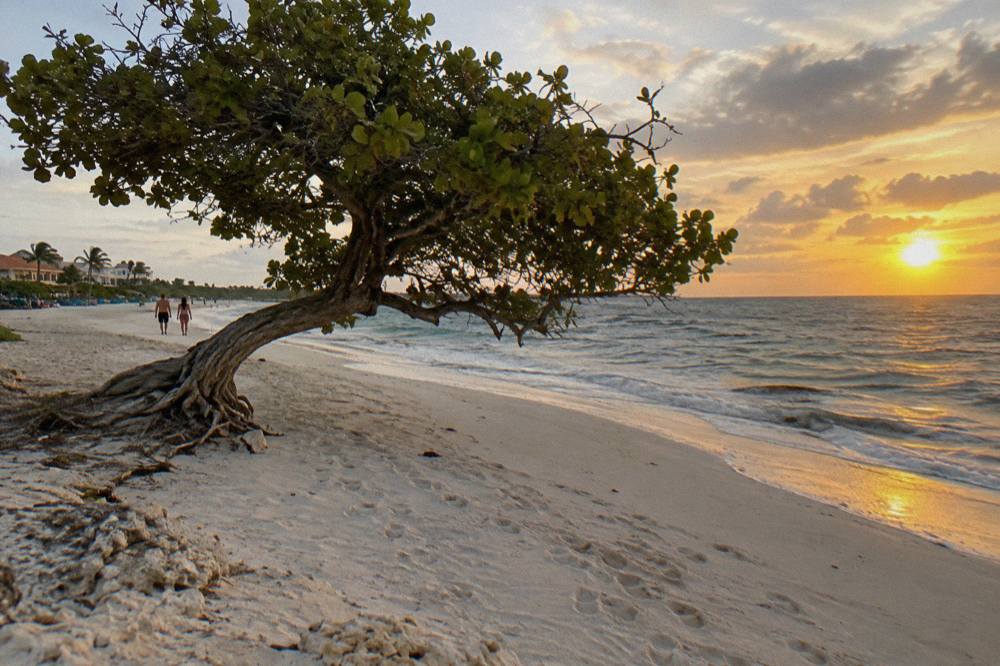
Eagle Beach is the best single beach for sunset for most visitors: it faces due west, it is wide enough that crowds dissolve, parking is easy, and the fofoti trees give the scene a silhouette no other beach offers. Hadicurari and Malmok are quieter alternatives. Palm Beach wins only if you want bars and piers within walking distance.
Eagle Beach's advantage is geometry plus room. Because the sand is so deep, a hundred people spread across it feel like ten, and the trees at the edge of the public area are close enough to walk to from the low-rise resorts. The beach sits in the island's quieter southern hotel zone, which also makes it the natural choice for anyone staying south; the trade-off is that the nearest pier-based sunset cruise departure, Pelican Pier, is a short drive or bus ride north.
Hadicurari is the north end's sleeper. It is the beach in front of the fishermen's pier, and it is where one of the island's classic schooners, the Jolly Pirates boat, operates from beside the Skull and Crossbones Pirate Shop. Watching from the sand there while a pirate-style schooner heads out with its own sunset crowd is a genuinely Aruban scene, and the beach rarely feels full. The wind is a factor: this stretch is popular with kite surfers precisely because it catches the east-northeast trades, which blow all year and average 7.3 m/s annually at the airport, about 14.2 knots.
If you are still choosing where to sleep rather than just where to stand, the comparison of Palm Beach and Eagle Beach for your stay matters more than the sunset itself, since both face the same sun and the difference is everything around it.
Of course, the sea option deserves a fair hearing while you weigh beaches. Three cruises below cover the range from a budget shared sail to an adults-only dinner on the water.
What Can You See From The Piers In Noord?
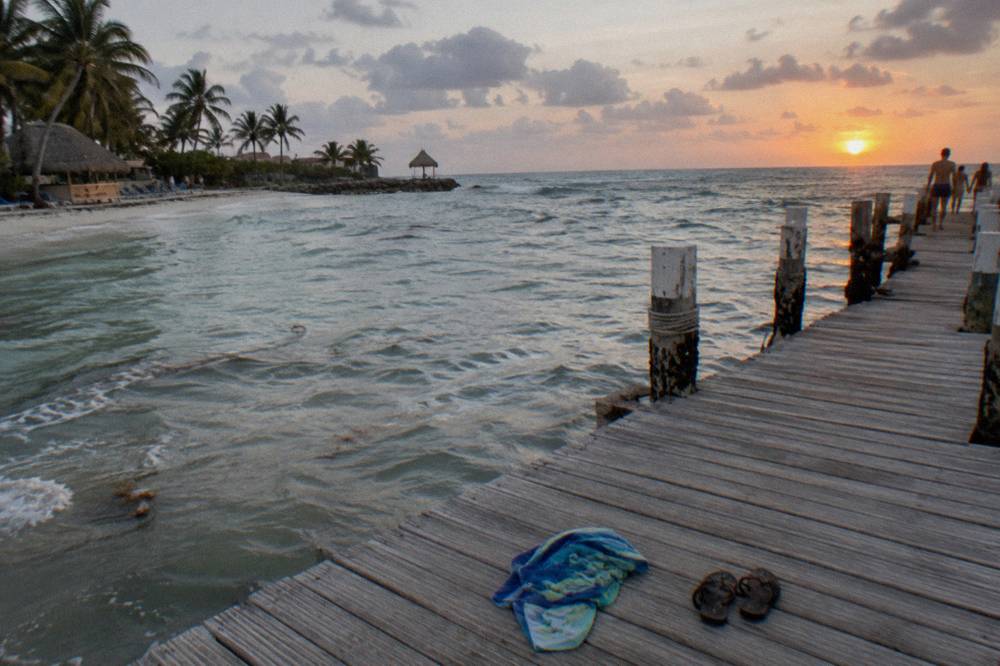
The Noord piers, Pelican Pier, De Palm Pier, Hadicurari's fishermen's pier and the MooMba Beach stretch, put you over the water without a boat ticket: benches, restaurants and a straight west-facing deck. Pelican and De Palm are also the boarding points for most of the island's shared sunset sails, so they double as viewing spots and departure gates.
Pelican Pier juts off Palm Beach beside the Pelican Nest Seafood Grill, and De Palm Pier sits a little south between the Hilton and the RIU. Both are commercial piers with bars and restaurants, which means you can watch the sun drop over the water with a drink and a rail in front of you, then walk back to the high-rise hotels in minutes. The fishermen's pier at Hadicurari is rougher and quieter, more planks than promenade, but it faces the same horizon for free.
Distances tell you how the piers relate to the snorkel sites north of them. As the crow flies, Pelican Pier sits about 3.3 km from the Antilla wreck site and 3.4 km from Boca Catalina, De Palm Pier about 3.9 km from the Antilla, and MooMba Beach about 3.1 km. Sails from these piers head north along exactly that coast, which is why the sunset cruise you board at Pelican Pier often traces the shoreline you were admiring from it. The guide to the Palm Beach piers covers each pier's operators and restaurants in detail.
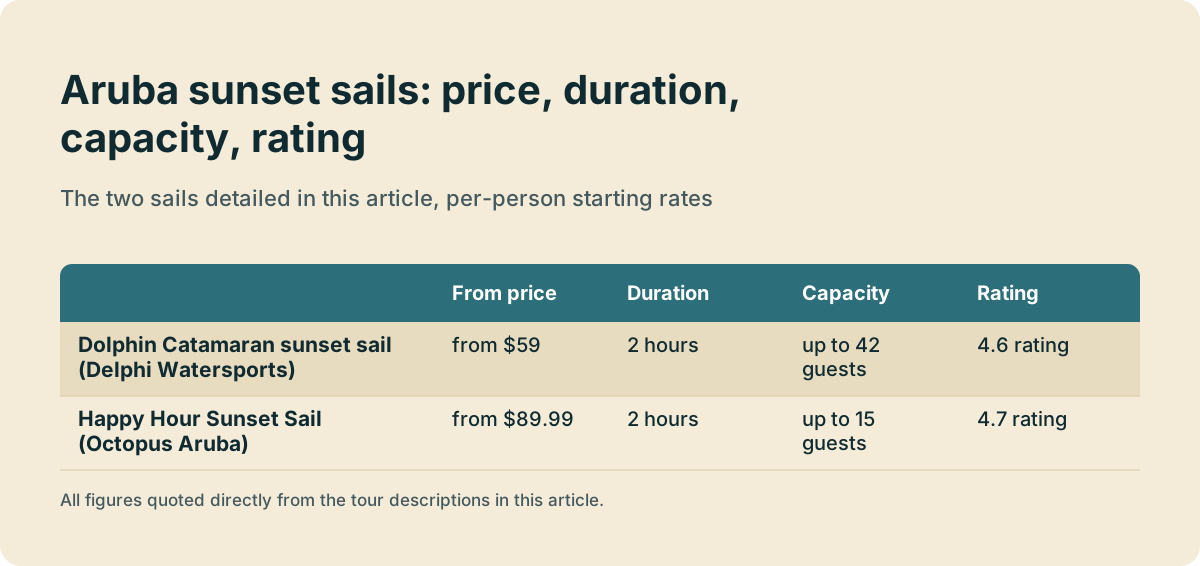
The upgrade from pier to boat is smaller than most visitors expect in distance and larger in experience. The Dolphin Catamaran sunset sail, run by Delphi Watersports, boards straight off the beach in front of the Hyatt Regency rather than a pier, carries up to 42 guests on a 45-foot catamaran, and lists drinks and snacks among its inclusions. It runs 2 hours, from $59 per person, and the listing carries a 4.6 rating from 897 reviews. Free cancellation is listed, and the tour page has the full details, with Dolphin Catamaran Sunset Sail worth a click before you commit to a beach night instead.
Where Do Locals Watch The Sunset Around Oranjestad?
Around Oranjestad the local sunset spots are Surfside Beach, just south of the cruise terminal, and the Renaissance Marina boardwalk, about 0.4 km from the port as the crow flies. Both are free and both face the water. If you want to keep exploring on foot beyond these two spots, our guide to walking around Aruba from the cruise port explains which areas you can reach from the terminal and when a taxi is the smarter choice.
Surfside is the beach Aruba actually lives on in the evening. It sits close to the airport approach, so planes descend over the sea in front of you as the sun drops, a combination that sounds odd and photographs beautifully. For cruise passengers it is the closest real sunset option: the marina sits about 0.4 km from the terminal complex, and Surfside a short walk beyond that, though anyone sailing should check the ship's all-aboard time rather than trusting a clock estimate.
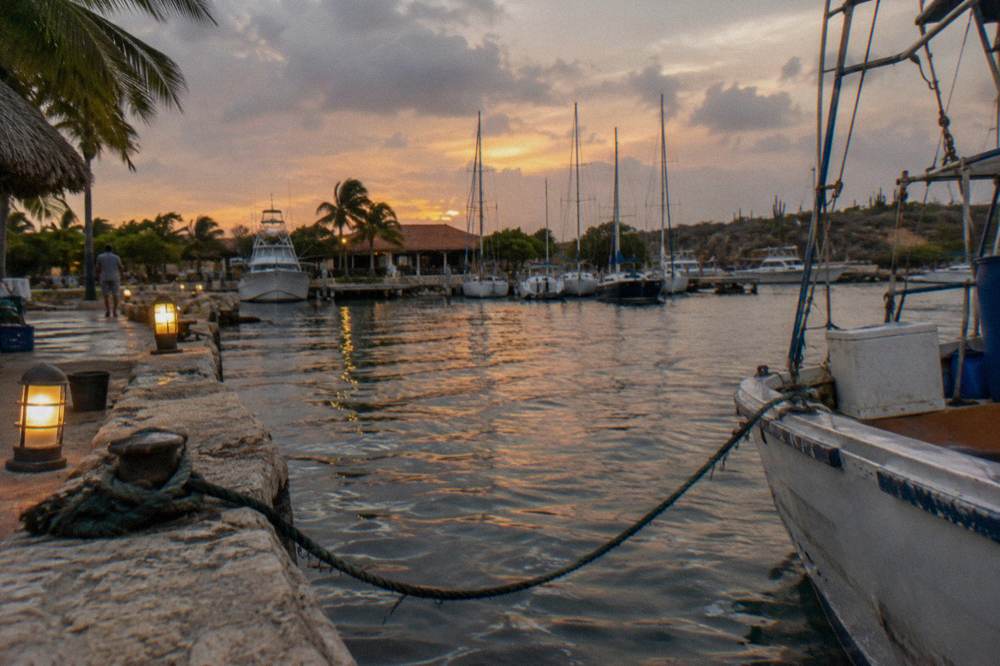
Renaissance Marina, on the Paardenbaai, is where several of the dinner and snorkel sails dock, behind Lucy's Retired Surfer Bar. Watching a catamaran ease out of the marina at golden hour from the boardwalk is free entertainment, and the same dock is the departure point if you decide to be on that catamaran instead. The Tranquilo dinner sail, for reference, describes its marina location as 7 minutes by car from the high-rise resorts and an 8 minute walk from the cruise terminal.
For an on-the-water evening instead, the Happy Hour Sunset Sail from Octopus Aruba is the standout small-boat option: a 40-foot trimaran out of Palm Beach, up to 34 guests, 2 hours, from $89.99 per person with an open cocktail bar and appetizers included. It carries a 4.7 rating from 1,880 reviews, which is one of the larger review pools among the island's sunset sails.
Is Watching From Land Better Than A Sunset Cruise?
Land is free and flexible, and for a traveler on a budget it is genuinely good, but the cruise wins on three counts: an unobstructed horizon with no buildings or heads in frame, drinks and often food included, and the sun setting beside you rather than in front of you. The upgrade is real, and it starts at $59 per person for a 2-hour shared sail.
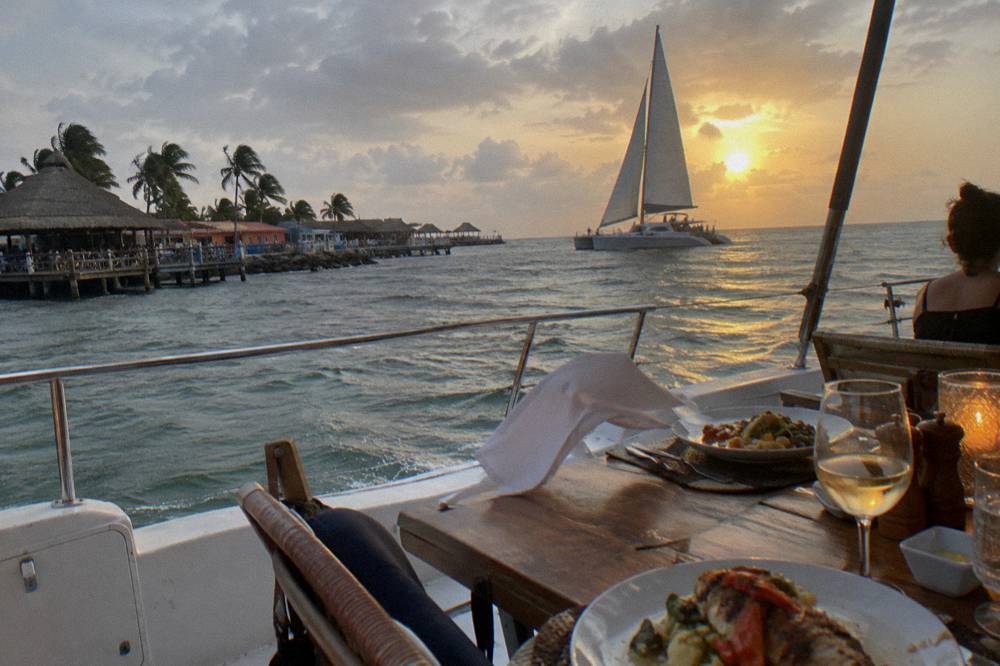
The honest comparison is about what each one does with the same 58 minutes of changing light. From a beach, you are stationary, and the show happens in front of you over the water. From a boat, the island itself turns gold and then silhouettes behind you while the horizon burns ahead, and there is nothing between your camera and the sun but rail. The drinks are part of the arithmetic too: a shared sunset sail with an open bar from $50 to $114 per person for 2 hours compares reasonably with an evening of beach-bar cocktails plus dinner you would buy anyway.
| Option | Typical cost | Duration | What you get |
|---|---|---|---|
| Public beach | Free | As long as you like | Sand, horizon, bring your own everything |
| Pier bar in Noord | Drink and food prices | Open-ended | A rail over the water, service, restrooms |
| Shared sunset sail | From $59 per person | 2 hours | Boat, crew, drinks, snacks on most listings |
| Sunset dinner cruise | From $109 per person | 2.5 to 3 hours | Dinner, open bar, table on the water |
| Private charter | From $550 per group | 2 to 3 hours | Your own boat, your own crowd |
The dinner tier deserves a specific mention because it answers the obvious next question, what about eating. Red Sail Sports' three-course dinner cruise runs 3 hours from Piet's Pier Bar on a luxury catamaran, from $137 per person, with an open bar covering local beer, cocktails, wine and soft drinks, and a 4.8 rating from 456 reviews with free cancellation listed. Its sister listing, the Caribbean dinner sail with live music at from $109 per person, posts its buffet menu openly: mixed salad, grouper with creole sauce, chicken in mushroom white wine sauce, keshi yena, coconut rice with fried plantain, and chocolate mousse, served Tuesdays from 5:30 to 8:00 pm per the operator's own page. That is a full Aruban table on the water, not a snack tray.
What Time Does The Sun Set In Aruba Each Month?
Sunset in Aruba swings only about 58 minutes across the whole year: earliest around 6:11 pm in mid-November, latest around 7:09 pm in mid-July, with mid-January at about 6:33 pm and mid-April at about 6:52 pm. Aruba keeps UTC-4 year round with no daylight saving, so these times hold steady relative to your resort clock all year. Once you know when the sun will drop below the horizon, our honest guide to the green flash in Aruba explains why nobody can promise you that famous emerald blink and what actually improves your odds.
The small swing is a latitude effect. Close to the equator, day length barely changes, so a departure time that works in one month works in nearly all of them. Operators state their own start times on their listings, and several run the standard 5:30 to 7:30 pm window in the popular months.
| Month (15th) | Sunset |
|---|---|
| January | 6:33 pm |
| February | 6:46 pm |
| March | 6:50 pm |
| April | 6:52 pm |
| May | 6:57 pm |
| June | 7:06 pm |
| July | 7:09 pm |
| August | 7:00 pm |
| September | 6:41 pm |
| October | 6:21 pm |
| November | 6:11 pm |
| December | 6:17 pm |
These are the mid-month values for the 15th; neighboring days shift a minute or two, so treat them as "around" rather than to the minute. The golden hour logic follows directly: in November you want to be in position by 5:30 pm, in July by 6:30 pm, and the best color routinely arrives after the sun itself has gone.
Does Weather Ever Ruin The Sunset In Aruba?
Rarely, and almost never for long: Aruba averages 3,410 sunshine hours a year, sits outside the hurricane belt with no direct hurricane hit since 1851 per the tourism authority, and its rain peaks modestly in October through December, between 76.5 and 87.1 mm per month. Trade winds blow all year, strongest in June, lightest in October and November.
The rainfall numbers deserve their own read. October averages 76.5 mm and November 87.1 mm across the whole month, which sounds wet until you see the rainy-day counts: 7.3 days at 1 mm or more in October, 9.6 in November, against 1.5 in April. Mean daily maximums run from 30.3 C in January to 33.2 C in August and September, so the hour before sunset is the most comfortable hour of an Aruba day in any season.
Hurricane season runs 1 June to 30 November, and during it the weather can bring more rain, gusty winds or, occasionally, a total lack of wind; the Aruba Tourism Authority's hurricane season page states the island's position outside the belt plainly. The practical sea-state check is the Departamento Meteorologico Aruba marine forecast, which in a typical late-October reading showed east-northeast winds of 5 to 12 knots and waves around 1 foot in sheltered areas, exactly the conditions a west-coast sunset sail wants. Small-craft advisories do happen, and operators cancel or reschedule when they do; the listings with free cancellation, which is most shared sails covered here, make that painless.
Wind shapes the beach choice more than the boat choice. The trades blow east-northeast all year at a monthly mean of 5.8 to 8.7 m/s, and the northern beaches catch them hardest, which is why Hadicurari hosts kite surfers. On a windy evening a southern or sheltered spot, or a boat whose lee side faces west, is the more comfortable seat.
How Do You Choose Between The Land Spots And The Water?
Choose land if the budget is fixed, the evening needs to stay flexible, or small children make a 2-hour sail impractical; choose a cruise if this is a special evening, a celebration or your one big night out, since the shared sails start at $59 per person and the dinner tier replaces a restaurant meal you would pay for anyway. Many travelers do both across a week.
A simple decision path works well. If the answer to "is this a regular nice evening or an occasion?" is regular, go to Eagle Beach or Surfside with a towel and whatever the beach bar sells. If it is an occasion, or if the vacation budget already included a nice dinner, put that money on a dinner sail instead: the from $109 Caribbean dinner sail and the from $137 three-course cruise both replace dinner outright, open bar included.
Group makeup matters too. Pelican Adventures' sunset catamaran lists ages 4 and up, making the standard 2-hour sail workable with school-age kids, while the adults-only tier, including the Jolly Pirates grub-and-grog dinner sail at 4.9 from 60 reviews, from $125 per person, keeps the deck grown-ups only. Motion is rarely a deciding factor on the west coast, but anyone sensitive should know the options, covered in the guide to sea conditions and seasickness on Aruba boat tours. And for the themed middle ground, the Havana-themed sunset cruise from Pelican Pier pairs an open bar and Cuban hors d'oeuvres with a salsa lesson, from $84 per person, 2 hours, free cancellation listed; it is a new, thinly reviewed listing, so judge it on its description rather than a review pool.
| Your evening | Best land pick | Best water pick |
|---|---|---|
| Free night, no plans | Eagle Beach | Watch from the sand |
| Date night | Pier restaurant at De Palm Pier | 3-course dinner cruise from $137 |
| Friends, drinks, music | Surfside Beach | Havana-themed cruise from $84 |
| Quiet escape | Malmok or Hadicurari | Small trimaran sail, up to 34 guests |
| Special occasion | Anywhere with champagne | Champagne and lobster sail from $179.10 |
For a fuller walk through every boat option, including the snorkel-and-sunset combinations that add a swim stop before the sun drops, the guide to choosing the best sunset cruise in Aruba goes boat by boat. Whichever way the evening goes, the horizon does its part: this site, Aruba Sunset Cruises, exists because that horizon is worth planning around.
Common Questions About Watching The Sunset In Aruba
Which Beach In Aruba Is Best For Sunset?
Eagle Beach is the strongest pick for most visitors: due-west facing, wide enough that crowds dissolve, with free parking and the famous fofoti trees for silhouettes. Hadicurari and Malmok are quieter northern alternatives, and Palm Beach suits anyone who wants bars and piers within walking distance.
What Time Does The Sun Set In Aruba?
Between about 6:11 pm in mid-November and about 7:09 pm in mid-July, a total swing of roughly 58 minutes across the year. Mid-January sits at about 6:33 pm, mid-April at about 6:52 pm, and Aruba keeps the same clock offset year round with no daylight saving.
Is A Sunset Cruise Worth It If The Beach Is Free?
For most travelers, yes, on at least one night. The beach gives you the same sun for nothing, but the cruise gives an unobstructed horizon, drinks and often food included, and the island turning gold behind you. Shared sails start at $59 per person for 2 hours, and dinner cruises from $109 replace a restaurant meal.
Where Can Cruise Passengers Watch The Sunset In Oranjestad?
Surfside Beach and the Renaissance Marina boardwalk are the closest free options, with the marina about 0.4 km from the cruise terminal as the crow flies. Check your ship's all-aboard time before committing to any evening, since a sunset past 6:30 pm can clash with departure depending on the sailing.
Does It Rain On Aruba Sunsets In The Fall?
Sometimes, briefly. October and November are the wettest months at 76.5 and 87.1 mm respectively, but that rain falls over roughly 7 to 10 rainy days, and showers tend to pass quickly. One cloudy evening rarely ruins a week; the island averages 3,410 sunshine hours a year.
Can You Watch The Sunset From The Piers Without A Ticket?
Yes. Pelican Pier and De Palm Pier are commercial piers with restaurants and bars you can patronize, and the fishermen's pier at Hadicurari is free to walk. The same piers double as boarding points for most shared sunset sails in Noord.