Green Flash In Aruba: What Is Actually Known
The green flash is a real optical effect and Aruba's clean western horizon gives watchers a fair stage, but no month, beach or operator can promise it. Here is what is actually known, plus the sunset clock and viewing spots that give any evening its best chance.
Short answer
The green flash is a brief green rim or blob of light that can appear in the final second of sunset over a clear, distant horizon, and no source on record can say how often it shows in Aruba. Sunset runs from about 6:11 pm in November to about 7:09 pm in July, so plan the hour first and treat any flash as a bonus.
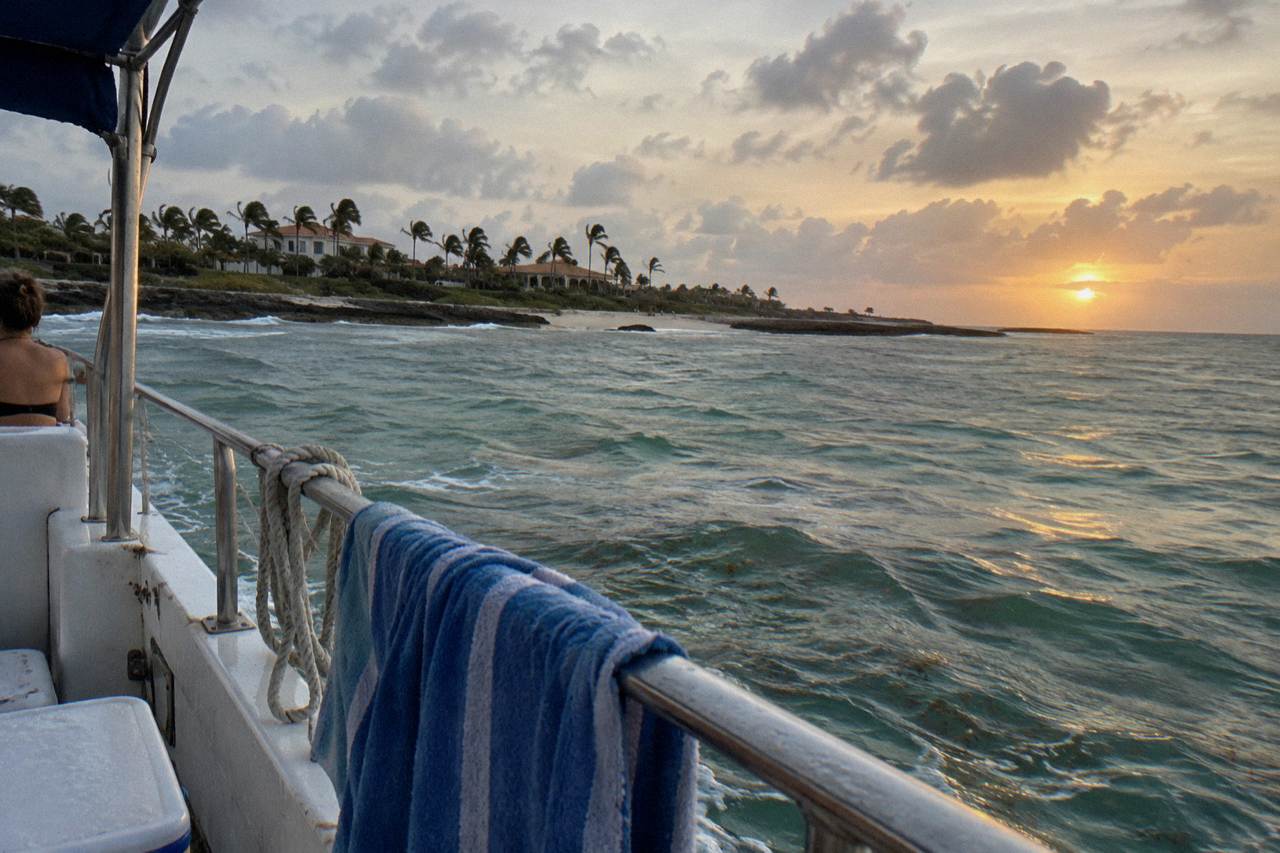
Every evening the sun drops into the Caribbean off Aruba's west coast, and a small number of watchers on that horizon are looking for one extra thing: a sliver of green light in the instant the sun's last edge vanishes. This guide is an honest accounting of what the green flash is, what nobody can promise about it, and the parts of the evening you can actually plan, from the month-by-month sunset clock to the piers at Noord and the boats that put an unobstructed horizon in front of you. Nothing here claims a frequency, a lucky month or a guaranteed vantage, because no sourced statement supports any of that. The real, dependable prize is the sunset itself.
What Is The Green Flash And Why Does The Horizon Matter?
The green flash is an optical effect of the atmosphere, a brief green edge or blob of light that can appear in the final second before the sun's upper rim disappears, and it demands an unusually clean, distant, low horizon to have any chance at all. It is not a reflection, not a lens artifact of the eye alone, and not something any beach, boat or month can schedule.
The effect comes from the atmosphere bending and spreading sunlight like a weak prism. As the sun sinks, the atmosphere splits its light into slightly offset colored images, red sitting lowest and green, briefly, on top. When the red image has already set, a thin green rim on the last visible sliver can survive for a second or so. Over land, hills, clouds and haze near the horizon scatter that sliver away before anyone sees it. Over open water with a sharp, far horizon, the geometry at least becomes possible. That is the entire reason a flat sea horizon, such as the one Aruba's leeward coast faces each evening, draws people who want to look for it.
The honest part comes next. How often the flash appears off Aruba, whether any month or hour favors it, and whether any particular trip has ever reliably produced it, none of that has a verified answer. No official or operator source on record makes a green flash claim, and a cruise or guide that hinted at one would be selling weather and optics it cannot control. The effect is treated here as a bonus: a one-second possibility that costs nothing to watch for, on an evening that is already worth the trip. The practical takeaway is to fix your gaze on the very last edge of the sun in the final moments, since the flash, when it comes, comes at the exact end. Do not stare at the sun during the approach; watch the horizon line and look properly only in the last seconds.
That framing shapes everything else in this guide. Instead of chasing a promise, you plan the things that are real: when the sun sets in the month you are visiting, where on the coast the horizon is truly open, whether a boat beats a beach, and what the weather file says about the season you chose. Each of those has an answer.
When Does The Sun Set In Aruba Month By Month?
Sunset times in Aruba shift through a window of about 58 minutes across the year, from around 6:11 pm in mid November, the earliest, to around 7:09 pm in mid July, the latest. Because Aruba sits close to the equator and skips daylight saving, the swing is modest, but it still decides whether dinner precedes or follows the show.
The table below gives the sunset time on the 15th of each month. For other dates, treat these as close anchors and adjust by a minute or two, since the shift day to day is small. The full monthly breakdown lives in the Aruba sunset time by month guide, which adds the planning detail around each month.
| Month | Sunset on the 15th |
|---|---|
| January | 6:33 pm |
| February | 6:46 pm |
| March | 6:50 pm |
| April | 6:52 pm |
| May | 6:57 pm |
| June | 7:06 pm |
| July | 7:09 pm |
| August | 7:00 pm |
| September | 6:41 pm |
| October | 6:21 pm |
| November | 6:11 pm |
| December | 6:17 pm |

Two planning notes follow from the sunset table. A November or December traveler catches sunset before 6:20 pm, early enough that a 5:30 pm boat departure, a common start time on Aruba's evening sails, puts a full hour of daylight before the horizon moment. A July traveler has daylight past 7 pm, which pushes the whole evening later and makes a dinner-first plan more natural. Neither month is a better flash month, because no record supports any such claim; the numbers only tell you when to be in position, and being in position ten minutes early is the one discipline that always pays.
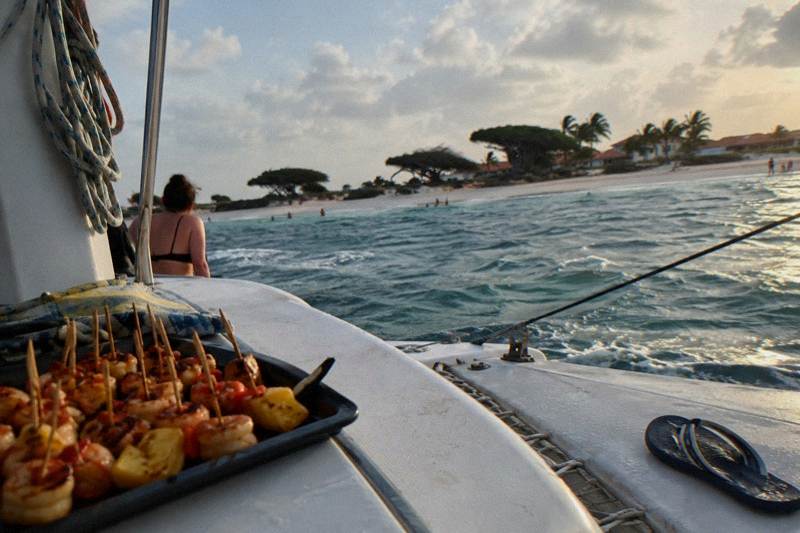
Since you will be on the water or at the shore anyway, the boat matters more than the myth. Three evening sails cover the main formats: an affordable catamaran, a pirate-style schooner with a rope swing, and an open-deck catamaran.
The Dolphin Sunset Adventure Cruise, run by Delphi Watersports Aruba from the beach in front of the Hyatt Regency in Noord, is a 2-hour shared catamaran sail from $59 per person, carrying up to 45 guests with an open bar, snacks and Caribbean music listed, rated 4.6 from 168 reviews, and it lists free cancellation. The Catamaran Sail with Appetizers and Open Bar from Red Sail Sports is the most reviewed sunset listing covered on this site, 4.5 from 2,406 reviews, from $92 per person for 2 hours aboard a luxury catamaran from Piet's Pier Bar on Palm Beach, with appetizer bites and an open bar listed. The Jolly Pirate Sunset Sail with Open Bar, 4.6 from 476 reviews and from $70 per person, boards at MooMba Beach beside the Pirate Shop for a 2-hour sail on a pirate-style schooner with a rope swing; its listing shows no free-cancellation term, so treat the booking as committed.
Where On Palm Beach And The Noord Piers Is The Horizon Truly Open?
The leeward coast from Palm Beach north through Hadicurari faces open water to the west and southwest, and the piers at Pelican, De Palm and MooMba each give a shoreline stance with a long horizon; what ruins the view is not geography but boats at anchor, beach furniture in the foreground, and haze, so pick a spot with a clear sightline low to the water.
Palm Beach in Noord is the high-rise strip, and its piers double as the departure points for most evening sails. The Palm Beach piers guide covers the pier layout in depth; for the watcher, the useful fact is geometry. Standing on a pier puts you over the water, which removes the surf line, swimmers and beach umbrellas from the bottom of the frame. All three face the setting sun.
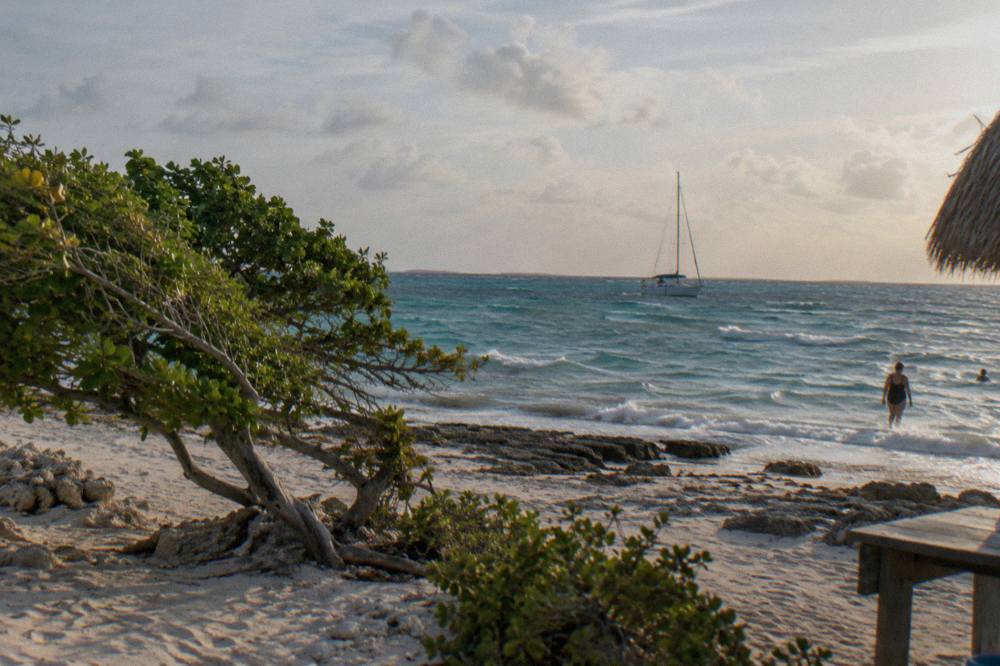
North of the strip, Hadicurari and the Malmok stretch thin out the crowd and give the same west-facing water. Onshore watching has one genuine limitation: from a beach you are always low, and a breaking wave line, a catamaran at anchor or a moored dinghy can sit exactly where the sun touches down. The watcher's workaround is simple, arrive early, scan the bottom edge of the view for clutter, and walk fifty meters either way if something floats into the frame. The best places to watch the sunset guide ranks the shore options; the short version for flash purposes is that any west-facing spot with an uncluttered lower frame works, and no spot is documented as luckier than another.
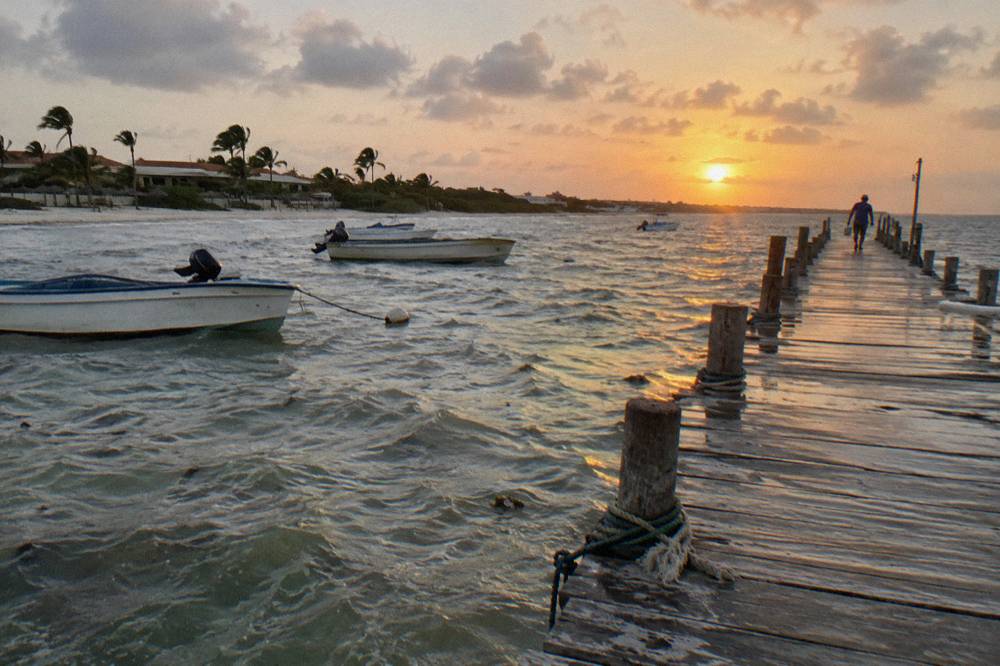
One caution belongs here because it is the opposite of a superstition. Some watchers assume a higher vantage, a rooftop or dune, is better. Height helps the view but does nothing for the flash, which depends on the sharpness of the horizon where sky meets sea, not on elevation. A pier rail at eye level over open water is at least as good as a tenth-floor balcony above haze, and often better.
Does A Boat Give You A Better Chance Than The Beach?
A sunset cruise puts you on open water with an unobstructed, sea-level horizon on every side, which is the one viewing condition the green flash genuinely needs, but no operator can or does promise the effect, and the value of the ticket is the sunset, the sail and the bar, with any flash as a free bonus at the last second.
Off the beach the horizon sits a few kilometers out; off a boat it sits all around you at eye level, with nothing floating in the lower frame and no surf line to scatter the final sliver of light. That is the whole, honest argument for the boat, and it is a good one. Aruba's evening sails are built for exactly this hour: 2 hours on the water, drinks flowing, music playing, the sun descending off the beam. The listings do not promise optics and this guide will not either. What the listings do state is boats, piers, prices and inclusions, all of which you can compare on the catamaran sunset cruise guide.
| Evening sail | Operator and departure point | Duration | From (per person) | Listing states |
|---|---|---|---|---|
| Dolphin Sunset Adventure Cruise | Delphi Watersports, beach at the Hyatt Regency, Noord | 2 hours | $59 | Open bar, snacks, up to 45 guests, free cancellation |
| Catamaran Sail, Appetizers and Open Bar | Red Sail Sports, Piet's Pier Bar, Palm Beach | 2 hours | $92 | Appetizer bites, open bar, up to 75 guests, free cancellation |
| Jolly Pirate Sunset Sail | Jolly Pirates, MooMba Beach, Palm Beach | 2 hours | $70 | Open bar, rope swing, up to 40 guests |
| Happy Hour Sunset Sail | Octopus Aruba, beach hut on Palm Beach | 2 hours | $89.99 | Open cocktail bar, appetizers, up to 34 guests, free cancellation |
| Pelican Sunset Sail | Pelican Aruba, Pelican Pier, Noord | 2 hours | $73 | Alcoholic beverages, snacks, up to 60 guests, free cancellation |
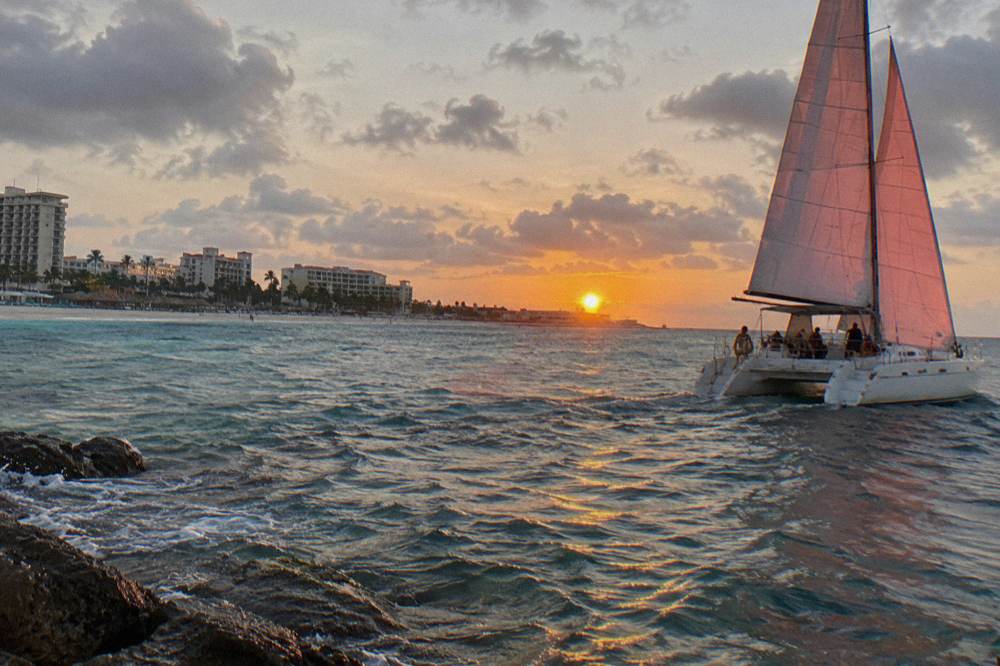
For a dinner-format evening that spans the whole sunset window, the Dinner Sail with Open Bar by Catamaran from Red Sail Sports runs 3 hours from $137 per person aboard a luxury catamaran from Piet's Pier Bar, rated 4.8 from 456 reviews, with a three-course dinner buffet and an open bar listing local beer, a cocktail menu, house wine, sparkling wine, sodas and juices, up to 40 guests, and free cancellation listed. The Red Sail Caribbean dinner sail even publishes its Tuesday menu, from mixed salad and grouper with creole sauce to keshi yena, coconut rice with fried plantain and chocolate mousse, with a 5:30 to 8:00 pm window that brackets a November sunset from the water. The wider set of guides lives on Aruba Sunset Cruises.
For a smaller, cocktail-forward format, the Happy Hour Sunset Sail with Savory Bites and Cocktails from Octopus Aruba, a 40-foot trimaran carrying up to 34 guests, runs 2 hours from $89.99 per person with an open cocktail bar and appetizers, rated 4.7 from 1,880 reviews, departing the Octopus beach hut on Palm Beach, with free cancellation listed. Small boats mean fewer heads at the rail when the last second comes, which is a comfort consideration rather than an optical one. A mid-size option is the Pelican Sunset Sail, an open-deck catamaran from Pelican Pier, from $73 per person for 2 hours, rated 4.5 from 663 reviews, with alcoholic beverages and snacks listed.
What Does Aruba's Weather Mean For Sunset Watching?
Aruba is hot semi-arid with roughly 3,410 sunshine hours a year and its rainy season concentrated in October through December, yet evening skies stay usable most nights in every month, and the island sits outside the hurricane belt with no direct hurricane hit on record since 1851, so the weather rarely kills the plan outright, it just varies.
The climate record for Oranjestad tells the seasonal story in numbers. October, November and December carry the most rain, 76.5, 87.1 and 80.1 mm on average respectively, and the most rainy days, 7.3, 9.6 and 11.0 days of 1 mm or more. March and April are the driest, at 10.0 and 8.6 mm with barely two rainy days each. With 3,410 sunshine hours a year on average, even the dullest month stays bright for most of the day. The trade winds blow all year from the east-northeast, strongest in June and lightest in October and November, and a typical marine forecast shows winds of 5 to 12 knots with waves around a foot in sheltered sections, per the Departamento Meteorologico Aruba marine page at meteo.aw.
| Month | Avg rainfall (mm) | Rainy days (1 mm+) |
|---|---|---|
| January | 44.0 | 10.8 |
| February | 19.5 | 4.5 |
| March | 10.0 | 2.0 |
| April | 8.6 | 1.5 |
| May | 14.1 | 1.7 |
| June | 17.4 | 2.8 |
| July | 19.6 | 4.1 |
| August | 31.4 | 3.1 |
| September | 42.9 | 3.3 |
| October | 76.5 | 7.3 |
| November | 87.1 | 9.6 |
| December | 80.1 | 11.0 |
Hurricane season, 1 June to 30 November, overlaps the rainy months, and the Aruba Tourism Authority notes the island's position outside the hurricane belt, with no direct hurricane hit since 1851 in the Atlantic database, while acknowledging that season can bring more rain, gusty winds or flat calm; the authority's own page at aruba.com covers it. Small-craft advisories do happen. The practical read for a sunset watcher is that cloud edges can be photogenic and a scattered sky is not a failed evening, but a horizon fully socked in ends the flash question before it starts. Check the marine forecast the morning of your sail, and know that free-cancellation listings let you reshuffle if the sky turns.
How Do You Plan The Evening Around The Sunset Hour?
Work backward from the sunset time for your date, be on the water or at the rail twenty to thirty minutes ahead of it, keep the final minute distraction-free, and let everything after the sun disappears, the colors, the boat lights, the drinks, be the reward you actually booked, with the flash treated as a possible last-second surprise on top.
The mechanics are unglamorous and they work. Check the sunset time for your date against the monthly table above. If a boat is involved, note the departure, most Aruba evening sails leave around 5:30 pm, a start that fits every month's sunset in the table, and arrive at the pier with time to spare; Jolly Pirates, for instance, asks guests to arrive 30 minutes before sailing. On board, claim a spot on the sunward rail early, finish photos before the final minute, and put the phone down for the last sixty seconds, because the effect, when it exists at all, is faster than a camera. On shore, the same clock applies with more freedom: walk the beach, find the clean lower frame, settle in. The what to wear guide handles the wardrobe and the seasickness and sea conditions guide the stomach, both of which matter more to the evening than any optical legend.
A few shore-side habits round it out. Mineral sunscreen matters here, and not only for your skin: Aruba bans sunscreens containing oxybenzone, so a reef-safe mineral formula is both the rule and the courteous choice before any boat trip. Bring ID regardless of your apparent age, since operators set their own age rules and some sails, like the Jolly Pirates dinner format, are adults only. Tipping is optional and never a stated percentage for crews, so budget it as a courtesy rather than an obligation, per the tourism authority's tipping guidance at aruba.com. None of this improves your odds of a green flash, because nothing does. All of it improves the hour you are actually buying, which is the deal worth making.
For a longer evening that combines a snorkel stop with a sunset and a full barbecue dinner on the water, the Spronk Catamarans turtle sail from Renaissance Marina in Oranjestad runs 4 hours 30 minutes from $119 per person, rated 4.6 from 378 reviews, with dinner, an open bar and snorkeling with sea turtles listed, and free cancellation on the listing. It is a different animal from a pure sunset sail, but it ends in the same light. Another full-evening option is the Banana Adventure Catamaran Tropical Sunset Sail, from $50 per person for 2 hours from MooMba Beach, rated 4.8 from 141 reviews, with one-way pickup toward the catamaran listed and free cancellation, a good pick for travelers staying inland who want the ride out handled.
However you build the evening, the trio below covers three very different routes into it: Spronk's turtle and shipwreck snorkel that finishes with a sunset BBQ, the Banana Adventure catamaran at the lowest from-price on the site, and Octopus's happy hour trimaran pouring drinks as the light drops. All three put a clean horizon in front of you for the final minute, which is the most anyone can honestly do.
Common Questions About The Green Flash In Aruba
Can You See The Green Flash In Aruba?
Sometimes, possibly, and nobody can say how often. The flash is a real atmospheric optical effect, and Aruba's open west-facing horizon over the Caribbean is the right kind of stage. But no verified source gives a frequency for Aruba, and no month, beach or operator can promise it. Watch the sun's last edge in the final second and treat the flash as a bonus.
What Time Is Sunset In Aruba?
On the 15th of each month, sunset runs from about 6:11 pm in November, the earliest, to about 7:09 pm in July, the latest, a spread of about 58 minutes across the year. Check the exact date's time before you plan, and be in position twenty minutes early.
Is A Boat Better Than The Beach For Catching It?
A boat gives a sea-level, unobstructed horizon on every side, which is the one viewing condition the effect genuinely requires, so the geometry favors the water. No operator promises a flash, though, and the ticket's real value is the sunset, the sail and the included drinks.
Which Month Is Best For The Green Flash In Aruba?
No month has a documented edge. March and April are the driest months on the Oranjestad climate record and October through December the wettest, but a clear horizon can occur in any month, and the effect is too rare and unstudied to attach to a season. Pick your month for weather and crowds, then watch the last second regardless.
How Long Does The Green Flash Last?
Roughly a second, sometimes less, at the very end of sunset. That is why watchers focus on the final edge of the sun rather than the approach, and why cameras usually miss it. If it appears, it appears as the sun's upper rim vanishes.