Seasickness And Sea Conditions On Aruba Boat Tours
Aruba sits in steady trade winds on a leeward coast, which is why most sunset sails are gentle, but swell, wind and the occasional advisory still matter when you pick a boat.
Short answer
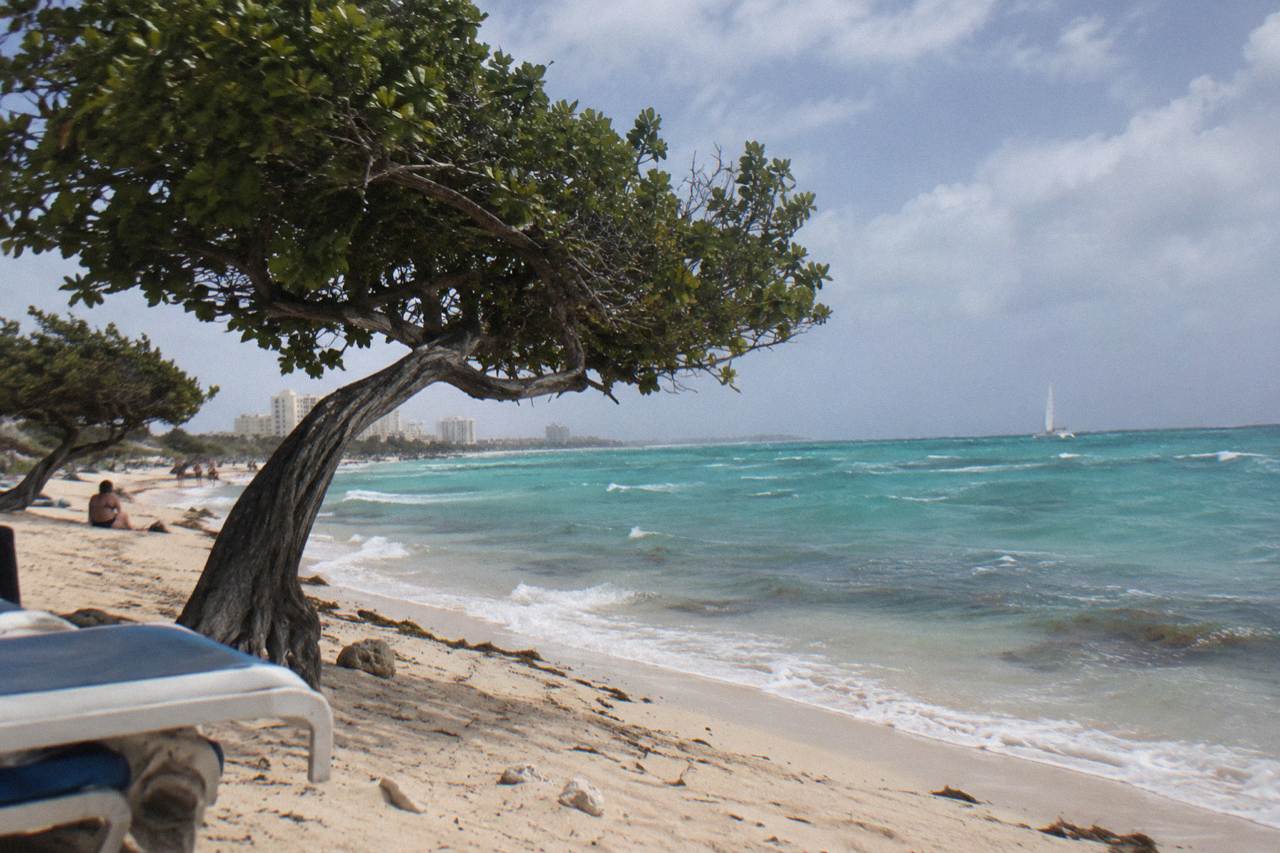
Aruba's west coast, where Palm Beach, Noord and the main piers sit, is the sheltered side, with waves around 1 foot in protected areas. Trade winds average 7.3 m/s, strongest in June and lightest in October and November, so most sunset cruises sail in slight to moderate conditions.
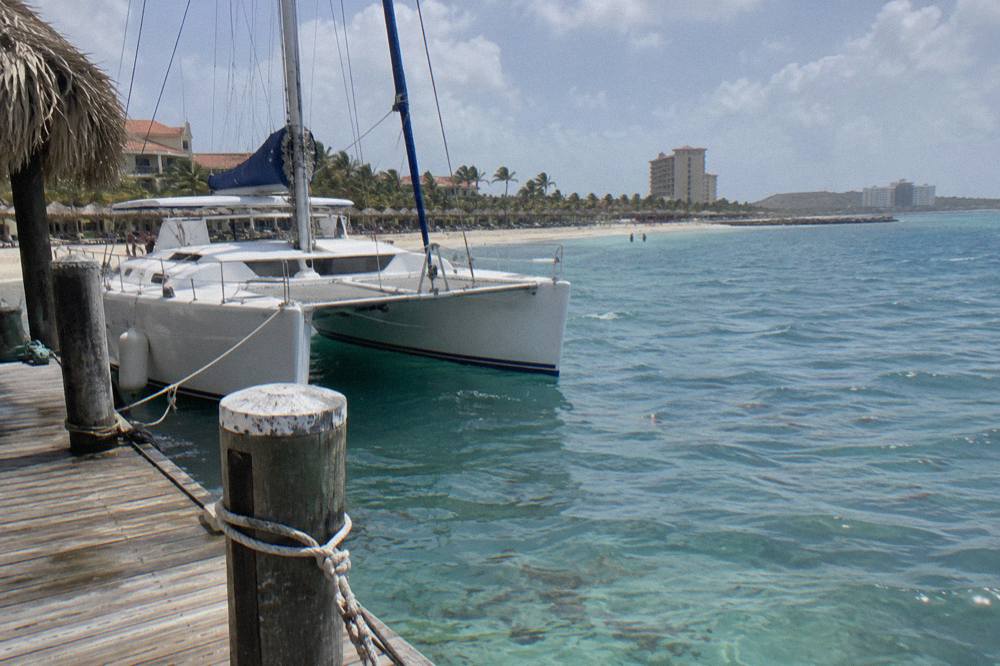
Most people who worry about seasickness in Aruba are worrying about the wrong ocean. The high-rise hotels of Palm Beach, the piers at Noord and the marina at Oranjestad all face west and southwest, onto the lee shore, and that is where nearly every sunset cruise on this site departs. The rough water in Aruba, when there is any, sits on the exposed east and north coasts facing the trade winds, several kilometres from where your boat boards.
That said, wind, swell and the occasional tropical wave are real, and they change what the water feels like under a 45-foot catamaran versus a small trimaran. This guide walks through Aruba's sea conditions season by season, which side of the island and which pier give the calmest ride, which boats steady best, and what actually works for seasickness prevention. Everything here comes from the meteorological record and from what the cruise listings themselves state.
How Rough Are The Seas Around Aruba, Really?
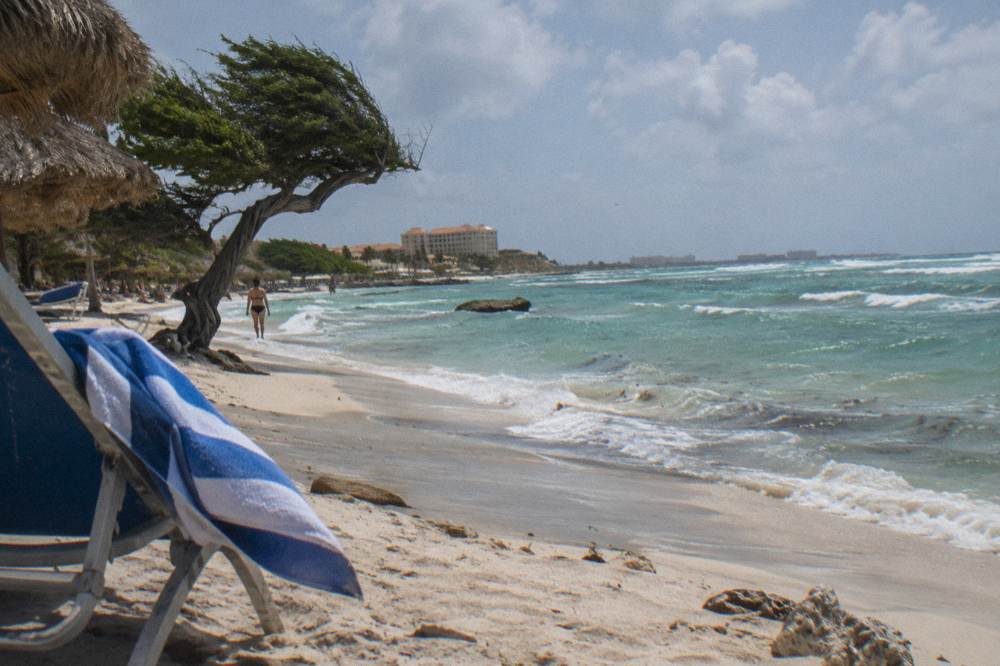
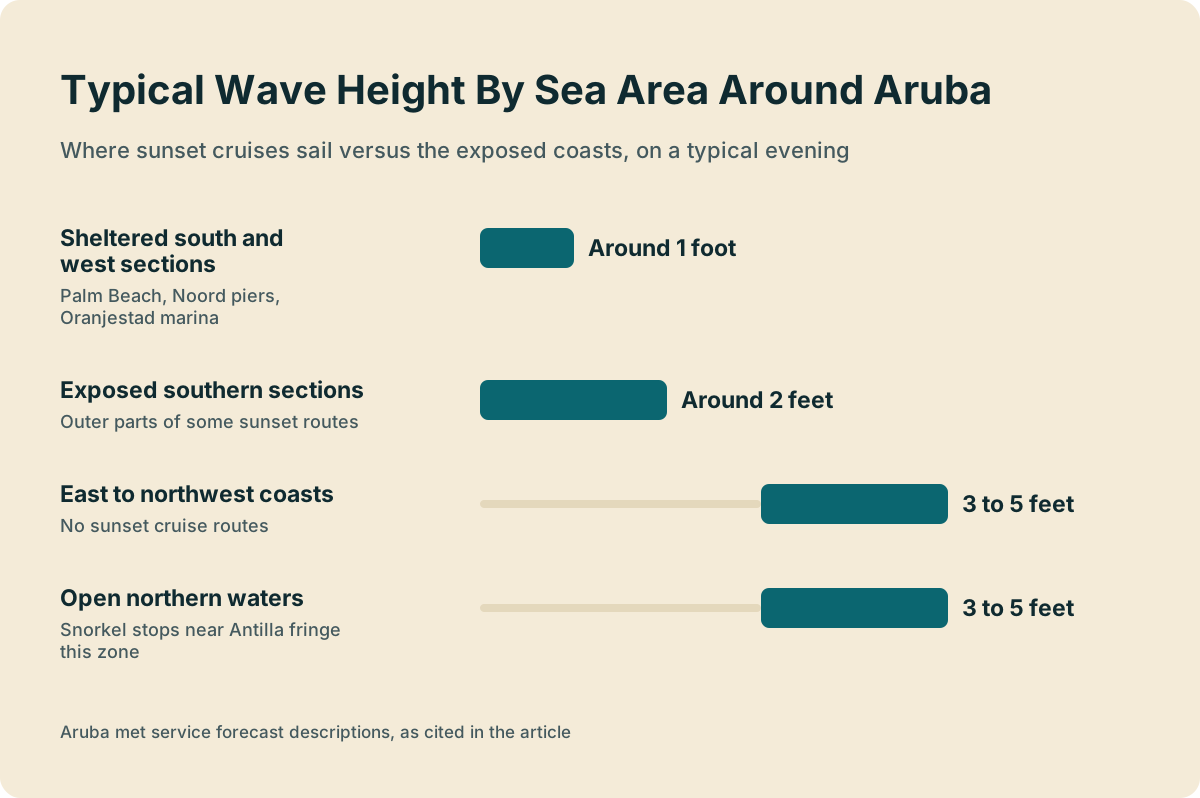
Not rough at all where it counts: on a calm forecast day the sheltered leeward coast off Palm Beach and Oranjestad sees waves around 1 foot and exposed southern sections about 2 feet. With east-northeast winds of 5 to 12 knots, the Aruba met service reports smooth to slight seas on the protected south side, making the sunset-cruise corridor the gentlest part of the map.
That forecast shape is close to a standing pattern rather than an unusual day. Aruba's trade winds blow from the east and northeast all year, so the wind arrives on the island's windward side first and the western leeward shore sits in its shadow. A sunset cruise leaving Pelican Pier, De Palm Pier or the Renaissance Marina heads out into water that the island itself has buffered.
The numbers that matter to a nervous sailor are small. One foot of wave height on a 60 to 80 guest catamaran is barely a sensation; you feel the wake of other boats more than the sea. The forecast's "slight" band, roughly 1 to 2 feet, produces a slow roll that most guests barely register. It is the "moderate" rating on the exposed east to northwest coasts that turns into spray and pitching, and no sunset cruise from this island's west-coast piers sails there.
Where swell does reach the sunset fleet is on the snorkel combos. The routes to the SS Antilla wreck off Malmok and Boca Catalina run up the northwestern end of the leeward coast, where north swells wrap in. Pelican Pier sits about 3.3 km from the Antilla as the crow flies, MooMba Beach about 3.1 km, so those stops sit closer to the transition zone between sheltered and exposed water. If you are prone to motion sickness and choosing between a straight sunset sail and a snorkel-and-sunset combo, the combo spends more time in the livelier water.
| Sea area | Typical forecast description | Approximate wave height | Where sunset cruises sail |
|---|---|---|---|
| Sheltered south and west sections | Smooth to slight | Around 1 foot | Palm Beach, Noord piers, Oranjestad marina |
| Exposed southern sections | Slight | Around 2 feet | Outer parts of some sunset routes |
For more on how rain and wind shape the broader sailing calendar, see the companion piece on rain and trade winds for Aruba boat tours.
Which Side Of Aruba Has The Calmest Water For A Sunset Cruise?
The west coast between MooMba Beach and the Renaissance Marina in Oranjestad is the calm side, and every shared sunset cruise covered here departs from it: Pelican Pier and De Palm Pier on Palm Beach in Noord, MooMba Beach, Hadicurari Fishermen's Pier, and the Renaissance Marina in Oranjestad. The eastern and northern coasts have no sunset-cruise departures at all precisely because they face the trade winds and the swell.
Within the west coast there are still micro-differences. The Palm Beach stretch in Noord is a continuous hotel beach with a row of piers. Oranjestad's Renaissance Marina sits on the south coast proper, in the corner where the forecast reads "sheltered". The cruise terminal is about 0.4 km from that marina.
Hadicurari, at the north end of Palm Beach, is the one west-coast pier closest to the exposed northwest corner. The adults-only schooner snorkel cruise to the Antilla boards there. It is still modest by open-sea standards, but if you are anxious that is the departure to know about.
The boat choice interacts with the water choice. A large catamaran in one-foot slop is close to a floating terrace; the same slop under a 12-guest small boat, like the turtle snorkel at Tres Trapi, is more felt. The listings make this easy to check: each one states its vessel and its guest cap, and the combination tells you a lot about how the ride will feel before you ever read a review. For a fuller comparison of hull types, see catamaran versus sailboat versus pirate ship in Aruba.
One standout for calm-water sailing is the De Palm sunset sailing excursion: an 80-guest catamaran that departs De Palm Pier on Palm Beach, from $114 per person, rated 4.7 from 82 reviews, with an open bar and a 2-hour total. Big catamaran, sheltered pier, short sail, which is the whole formula for a nervous first-timer. You can read more on the De Palm sunset sailing excursion page or Check availability.
What Do The Trade Winds Do To Aruba Sea Conditions?
Aruba's winds average 7.3 m/s, about 14.2 knots, across the year at Queen Beatrix Airport, peaking at 8.7 m/s in June and dropping to 5.8 m/s in October and November. The east-northeast trades never stop, so the windier months mean a fresher, livelier ride with more spray and heel on sailing boats, while the autumn months bring the lightest airs and flattest evenings on the water.
The monthly pattern from the met service's 1981 to 2010 climate normals is steady enough to plan around. January sits at 7.0 m/s, climbs through spring to 8.0 in May, tops out in June, stays near 8 through July and August, and then falls away through September to the October and November floor. If your only criterion is glassy water, the October-to-November window is statistically the calmest, and it also happens to carry Aruba's earliest sunsets of the year, around 6:11 pm in mid-November, which puts a sunset sail conveniently close to dinner time.
The trade-off is rain. The Oranjestad climate normals show November as the wettest month on average at 87.1 mm, against 8.6 mm in April, and November averages 9.6 rain days of 1 mm or more. Autumn showers in Aruba tend to be short and localized rather than all-day soakers, but a sunset sail in November carries a slightly higher chance of a squall passing through than one in April or May. June offers the opposite package: the strongest wind of the year, with only 2.8 rain days and 17.4 mm on average.
For motion sickness specifically, wind speed matters less than the chop it builds. Twelve knots of steady breeze on the lee shore makes whitecaps but little roll under a catamaran's wide hull. The conditions that upset people are confused swell and the wrap-around swell near the northern snorkel stops, which is why boat type and route matter as much as the calendar. The met service's wind normals publish the full monthly breakdown if you want to check a specific travel month.
| Month | Mean wind (m/s) | Avg rainfall (mm) | Rain days (1 mm+) | What it means on the water |
|---|---|---|---|---|
| January | 7.0 | 44.0 | 10.8 | Steady breeze, occasional showers |
| April | 7.7 | 8.6 | 1.5 | Fresh breeze, driest, reliable sailing |
| June | 8.7 | 17.4 | 2.8 | Windiest month, lively ride |
| August | 7.8 | 31.4 | 3.1 | Breezy, showers returning |
| October | 5.8 | 76.5 | 7.3 | Light winds, wetter, early sunsets |
| November | 5.8 | 87.1 | 9.6 | Calmest air, wettest month |
The Banana Adventure catamaran sail boards at MooMba Beach on the sheltered Palm Beach side, caps at 36 guests, lists one-way pickup to the boat, free cancellation and drinks, from $50 per person, rated 4.8 from 141 reviews. Small enough to feel personal, big enough to sit steady.
Which Boat Type Is Steadiest For Nervous Sailors In Aruba?
Wide, powered or motor-sailing catamarans in the 40 to 80 guest range give the steadiest ride on Aruba's west coast, because two hulls resist rolling and their mass damps the one to two foot chop typical of a leeward evening. At the other end, trimarans and small boats flex more with the sea, which sailors enjoy and anxious guests sometimes do not. Pirate-style schooners sit in between and add rope-swing motion at the rail.
The listings on this site let you match hull to nerves. The Palm Pleasure catamaran and the Red Sail luxury cats carry 75 to 80 guests and are effectively floating lounges. The Delphi Dolphin catamaran, a 45-footer capped at 42 guests, is the mid-size option. The Octopus happy-hour sail uses a 40-foot trimaran capped at 34 guests, which means more of the sea comes through the deck, plus a livelier party atmosphere, from $89.99 per person, rated 4.7 from 1,880 reviews on one of its two listings.
Schooners like the Jolly Pirates vessel or the classic schooner on the adults-only snorkel cruise heel and roll more honestly than a catamaran, and part of their charm is exactly that. If you are booking for guests who love the pirate theme but hate motion, aim for the bigger catamarans and save the schooner for a second trip once everyone knows their sea legs.
One structural point that helps every choice: the sunset trips are short. Nearly every shared sunset sail on this site runs a 2-hour total, dinner cruises 2.5 to 3 hours, and the snorkel combos 3.5 to 4.5 hours. Exposure time is the single biggest lever on cumulative seasickness, so a nervous sailor's safest booking is a 2-hour shared catamaran sail, not a 4.5-hour combo. More on timing lives in how long the sunset cruise is in Aruba.
How Do You Prevent Seasickness On An Aruba Sunset Sail?
Sit mid-ship near the waterline where roll is least, keep your eyes on the horizon rather than a phone screen, and skip heavy food and alcohol before departure.
Anyone considering motion-sickness medication should ask a pharmacist or doctor first.
Position and behaviour matter as much as pills. The roll of a boat is smallest at the centre, both fore-aft and vertically, so the worst seats on any catamaran are the bow nets and the upper deck, and the best are the mid-ship benches and the cabin. Watching the horizon gives your inner ear and your eyes the same story; reading or scrolling gives them contradictory ones. Fresh air beats the cabin, and the forward-facing direction beats sitting aft-facing for most people.
Aruba adds a few local specifics. The open bar is a genuine hazard for the borderline seasick: alcohol worsens motion sensitivity and dehydration, so a common pattern is one drink after the first half hour, water alongside it, and food before boarding rather than only during. Aruba also bans oxybenzone sunscreens since 1 July 2020, so bring a mineral formula for any trip with a swim stop, more to protect yourself from a sunburn that would make any evening miserable than for the sea state. The met service's marine forecast is published daily and worth a glance the morning of your sail.
| Method | When to apply | Notes for an Aruba evening sail |
|---|---|---|
| Motion-sickness medication | Ask a pharmacist or doctor first | Ask about timing and interactions |
| Mid-ship seat, eyes on horizon | Throughout | Cheapest fix available on any catamaran |
| Light meal before, alcohol in moderation | Before and during | Open bars are listed on most sails; pace them |
Do Sunset Cruises In Aruba Get Cancelled For Weather?
Yes, occasionally, most often when the met service issues a small-craft advisory for a tropical wave. On ordinary evenings the sheltered west coast stays sailable nearly year-round, and cancellations are the exception rather than a routine risk, but no operator promises a sailing will run and none promises the sunset itself.
The pattern is seasonal and honest. Aruba sits outside the main hurricane belt, and the Atlantic hurricane database shows no direct hurricane hit on the island since 1851, though hurricane season formally runs 1 June to 30 November and the tourism authority notes the season can bring heavier rain, gusty winds, or stretches of dead calm. Nearby storms have brushed the island before, with Hurricane Ivan passing north in 2004 and Felix about 80 km away in 2007, both mainly as rough seas.
What that means for a booking is mostly administrative. Check the cancellation terms on the listing you are considering, because they differ: most shared sails on this site list free cancellation, while the Jolly Pirates sunset sail and the Delphi private catamaran charter list no free-cancellation terms, so a weather hold on those works differently than on a refundable ticket. Operators rerun cancelled departures where they can, but your ship schedule matters too, and cruise passengers should check their ship's all-aboard time rather than trusting any clock-time promise.
The evening itself rarely needs a plan B. Even in the wetter months, rain in Aruba arrives in brief localized bursts against an annual average of 3,410 sunshine hours, and a passing shower at 5 pm often clears into the best light of the night. Bring a light layer for the wind, keep the forecast handy, and treat a sunset you can see as a bonus the statistics make likely rather than a promise anyone can keep.
Which Month Gives The Best Sea Conditions For Nervous Sailors?
April and May are the statistical sweet spot, combining low rainfall, 8.6 mm and 14.1 mm respectively, with moderate winds of 7.7 to 8.0 m/s and reliable sunshine. October and November bring the calmest air, 5.8 m/s, and the earliest sunsets, around 6:21 pm and 6:11 pm mid-month, but trade them against the year's highest rainfall, 76.5 and 87.1 mm on average.
The choice is really between two profiles. Spring is the dry, breezy, dependable option: the sea carries a light chop from steady trades, rain days average 1.5 in April, and sunset sits late, around 6:50 pm in mid-March and 6:52 pm in mid-April. Autumn is the flat, soft option: lighter wind means smaller chop under the hull, the sunset arrives before 6:30 pm which suits families and early dinners, and the risk is a slightly higher chance of an evening shower or a rare advisory.
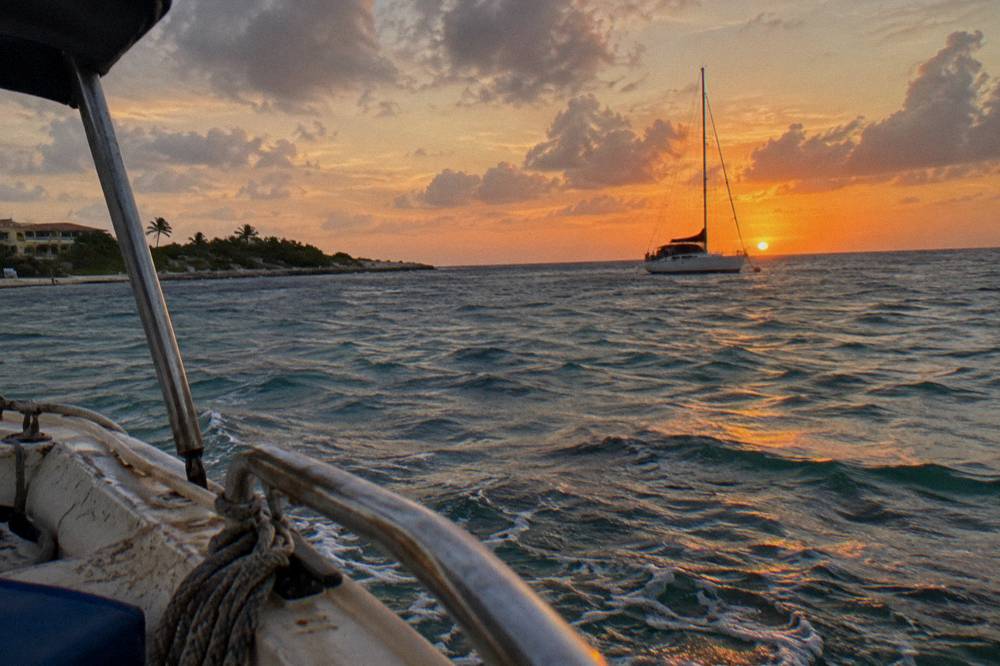
Summer demands one extra consideration, and it is not the sea. June through August brings the strongest winds of the year and the warmest air, with mean daily maxima reaching 33.2 C in August and September, so heat and spray, not roll, are what wear guests down on a 5:30 pm boarding. Sea surface temperature runs from about 26 C in February to about 29 C in October, and evening breeze makes most of the year comfortable on deck with a light layer for the ride back.
What Should Nervous Sailors Actually Book In Aruba?
Book a 2-hour shared catamaran sunset sail from a Palm Beach or Noord pier, in April, May, October or November if the calendar allows, with a mid-ship seat and a remedy taken before boarding, and prefer the larger catamarans if comfort outweighs intimacy. That single sentence eliminates most of the motion risk on this coast, because everything in it, sheltered pier, short duration, wide hull, calm season, works in the same direction.
From there, the rest is preference. The budget-conscious nervous sailor has a genuinely good option in the Delphi Dolphin catamaran sail, from $59 per person, rated 4.6 from 897 reviews, a 45-footer capped at 42 guests with an open bar and Caribbean music. Guests wanting the most-reviewed product on this entire site should look at the Red Sail appetizers-and-open-bar catamaran sail, from $92 per person, 4.5 from 2,406 reviews, on a luxury catamaran carrying up to 75. Guests who want a small-boat evening anyway should simply pick the calmest month and take the remedy seriously, because the Octopus trimaran's 34-guest happy-hour sail only needs basic preparation.
| If you worry about | Book instead | Why it helps |
|---|---|---|
| Rolling and pitching | Large catamaran, 60 to 80 guests | Twin hulls and mass damp the chop |
| Long exposure | A 2-hour shared sail, not a 4.5-hour combo | Less time for symptoms to build |
| Rough water near the boat | Palm Beach or Noord pier departure | Sheltered lee shore, around 1 foot seas |
| Windy evenings | October or November travel | Lightest monthly winds, 5.8 m/s |
| Losing money on a hold | A listing with free cancellation | Most shared sails list it; check yours |
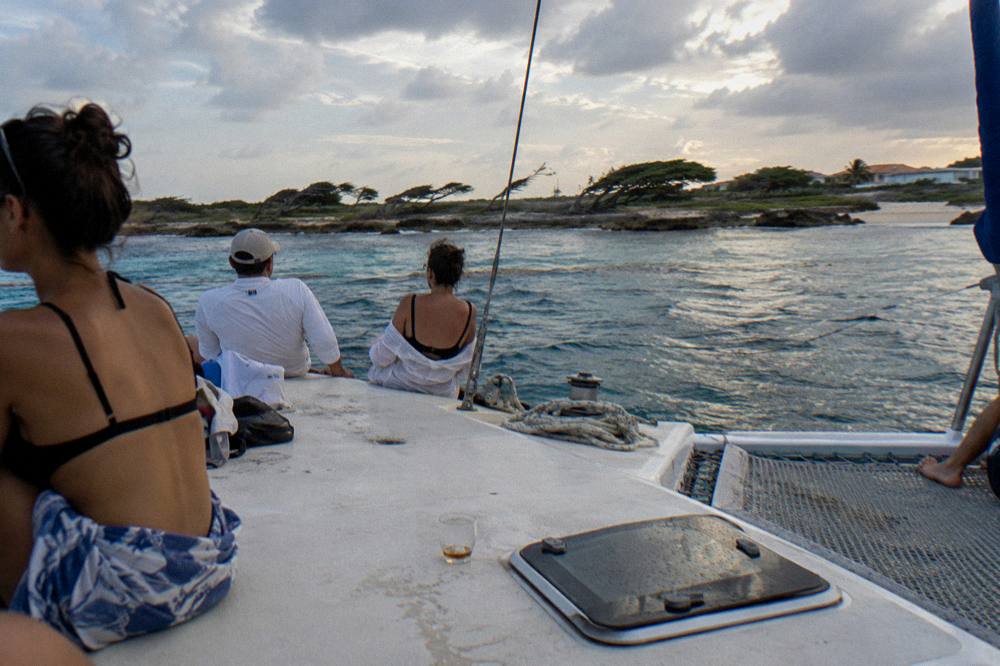
A final note on the crew. Aruba's operators run these routes almost nightly, and a captain will read the evening's water before leaving the pier. If conditions look wrong for you, say so at check-in rather than suffering quietly, and if a hold or reroute happens, the crew has seen it before. On Aruba Sunset Cruises the listings state exactly what each trip includes, so the nervous sailor's best tool is reading the vessel line and guest cap before clicking anything.
Common Questions About Seasickness And Sea Conditions In Aruba
How Rough Are The Seas Around Aruba, Really?
On the sheltered west coast where sunset cruises sail, a calm forecast day shows around 1 foot in protected spots and about 2 feet on exposed southern sections.
Which Side Of Aruba Has The Calmest Water For A Sunset Cruise?
The west coast. Every shared sunset cruise covered here departs from Palm Beach or Noord piers, MooMba Beach, Hadicurari, or the Renaissance Marina in Oranjestad, all on the lee shore protected from the east-northeast trade winds.
What Do The Trade Winds Do To Aruba Sea Conditions?
They blow from the east-northeast all year at a mean of 7.3 m/s, about 14.2 knots, peaking in June and easing in October and November. Windier months mean livelier sailing and more spray; autumn months mean the flattest evenings.
Do Aruba Sunset Cruises Get Cancelled For Weather?
Occasionally, most often during a small-craft advisory for a tropical wave. On ordinary evenings the sheltered coast stays sailable, and many shared listings carry free cancellation, though a few list no free-cancellation terms, so check your listing.
How Do You Prevent Seasickness On An Aruba Sunset Sail?
Sit mid-ship near the waterline, keep your eyes on the horizon, eat lightly before the trip, and pace the open bar.
Which Month Gives The Best Sea Conditions For Nervous Sailors?
April and May combine low rainfall with moderate winds, while October and November bring the calmest air and the earliest sunsets at the cost of the year's highest average rainfall. Either window works; June is the windiest month to pick if you are anxious.