What Is The Best Month To Cruise To Aruba?
A month by month breakdown of Aruba weather, sunset times, wind and hurricane season for cruise visitors deciding when to sail, and whether a sunset cruise fits a port day.
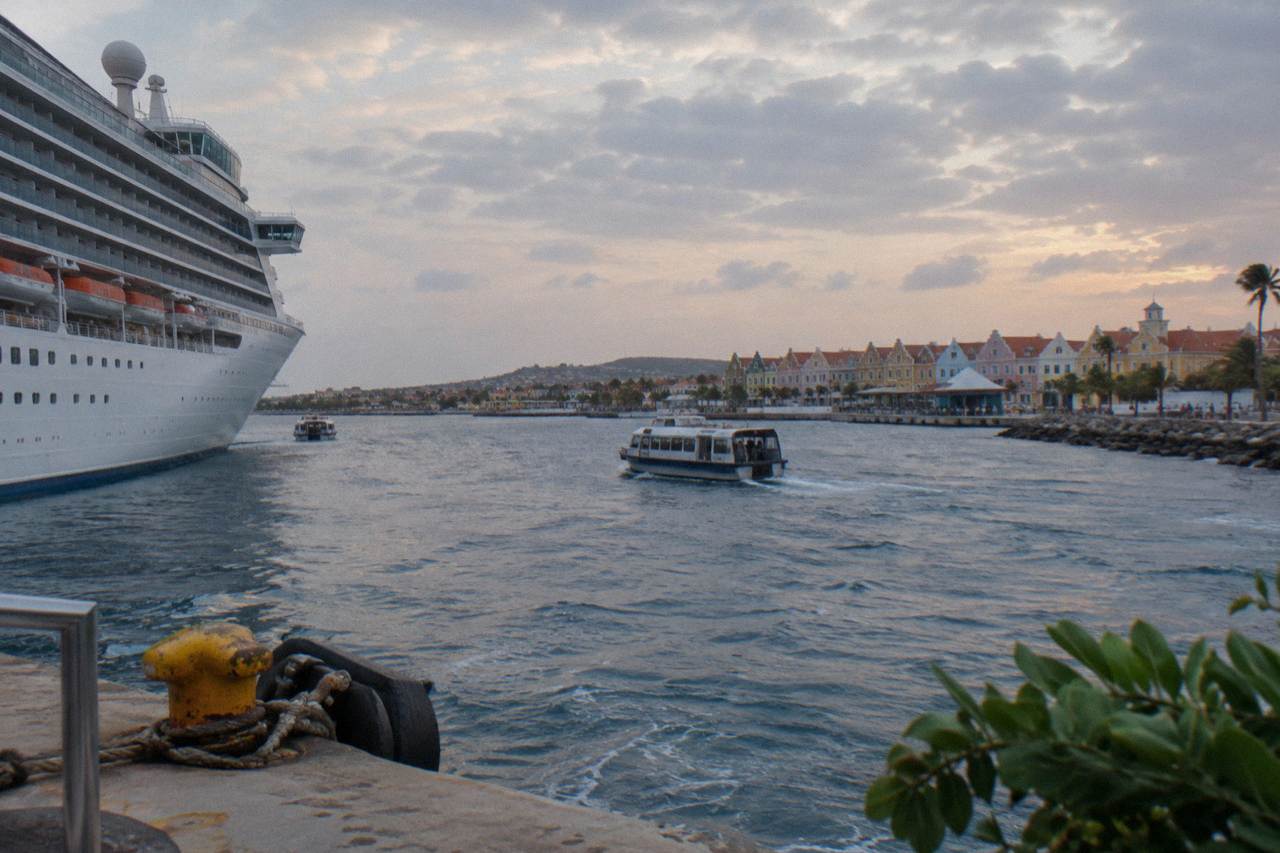
The month your ship calls decides what that day feels like: how strong the trade winds blow, how likely a passing shower is, and whether the sun sets at a quarter past six or nearly past seven. Aruba is one of the driest islands in the region, about 500 mm of rain a year in total. The island's position outside the hurricane belt, a point the Aruba Tourism Authority makes plainly, changes the usual "avoid September" math.
The honest answer to the timing question has three moving parts, and this article works through each one: the rainfall and sunshine numbers month by month, the wind pattern that peaks in June and eases in October, and the sunset clock, which slides from about 6:11 pm in November to about 7:09 pm in July. For anyone whose port day might end with a sail along Palm Beach, that sunset clock matters as much as the weather.
There is no single best month on weather alone, because Aruba stays warm and mostly dry year round. If the goal is the least rain, the late winter and spring stretch from February through May measures driest, with 19.5 mm or less of monthly rainfall and under five rainy days a month. If the goal is a late sunset for an evening ashore, June and July deliver. If you want the fuller picture of the wetter months, this month by month breakdown of Aruba's rainy season also explains what a passing shower means for a sunset cruise booking.
The rainfall record for Oranjestad, the 1991 to 2020 climate normals from the Departamento Meteorologico Aruba, splits the year cleanly. March and April are the driest months on the books at 10.0 mm and 8.6 mm respectively, with roughly two rainy days a month. The October to December stretch is the wettest, at 76.5 mm, 87.1 mm and 80.1 mm. Even in November, the wettest month, Aruba averages fewer than ten days with a millimeter or more of rain, and the sun still shines for about 248 hours that month.
What those averages do not capture is how short Aruba rain usually is. A passing shower from the east can soak one beach and miss the next, then clear within the hour. Trade wind cloud, the small cotton puffs that race along the north coast, is a daily feature and rarely ruins a beach day.
For cruise passengers the practical differences are smaller than the raw numbers suggest. Sea surface temperature around the island runs from about 26 C in February to about 29 C in October, so swimming is comfortable in every month. The real seasonal choice is between peak dryness in spring, longest evenings in early summer, and the quiet, low-wind, occasionally showery character of late autumn. The companion piece on this site, Aruba's best months for sunset cruises, covers the same question from the perspective of an evening on the water rather than a port call.
How Does The Weather Change Month By Month?
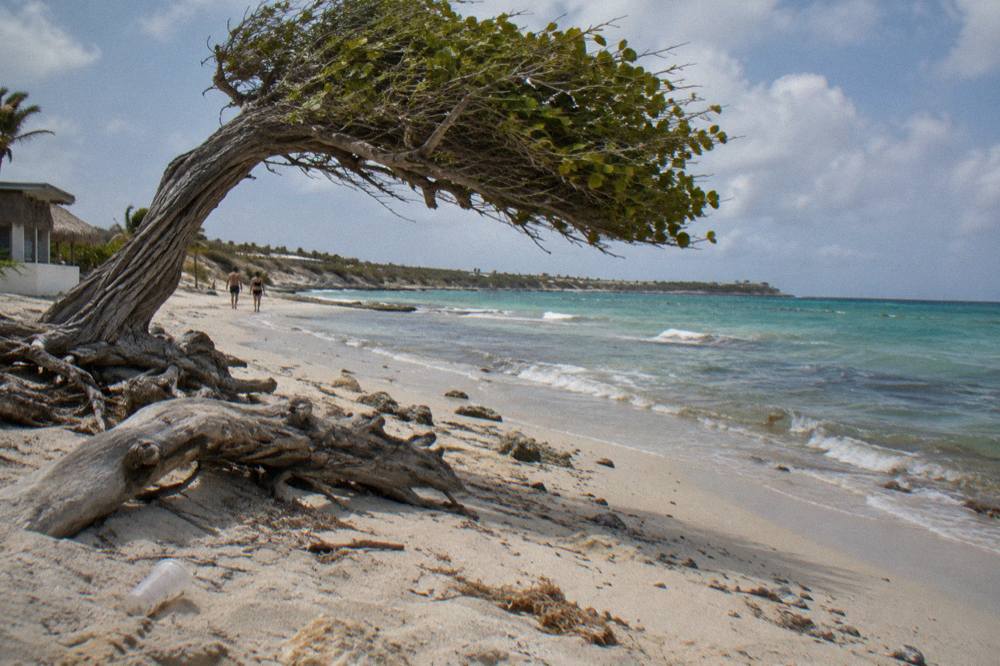
Rainfall is the clearest divider: February through June averages 20 mm a month or less, while October through December averages roughly 80 mm. Rainy days follow the same shape, from 1.5 in April to 11.0 in December. Winds run the opposite pattern, strongest in June at a monthly mean of 8.7 m/s and lightest in October and November at 5.8 m/s.
The table below pulls the month by month numbers into one view. The rainfall and rainy-day figures are the 1991 to 2020 Oranjestad climate normals; the wind means come from the Departamento Meteorologico Aruba's 1981 to 2010 normals recorded at Beatrix Airport. The annual mean wind speed works out to about 14.2 knots, which is why kite boarders love the island and why protected leeward beaches on the west coast feel far calmer than the raw numbers suggest.
| Month | Avg rainfall (mm) | Rainy days (1 mm+) | Mean wind (m/s) | Sunset, mid-month |
|---|---|---|---|---|
| January | 44.0 | 10.8 | 7.0 | Around 6:33 pm |
| February | 19.5 | 4.5 | 7.6 | Around 6:46 pm |
| March | 10.0 | 2.0 | 7.7 | Around 6:50 pm |
| April | 8.6 | 1.5 | 7.7 | Around 6:52 pm |
| May | 14.1 | 1.7 | 8.0 | Around 6:57 pm |
| June | 17.4 | 2.8 | 8.7 | Around 7:06 pm |
| July | 19.6 | 4.1 | 8.1 | Around 7:09 pm |
| August | 31.4 | 3.1 | 7.8 | Around 7:00 pm |
| September | 42.9 | 3.3 | 6.8 | Around 6:41 pm |
| October | 76.5 | 7.3 | 5.8 | Around 6:21 pm |
| November | 87.1 | 9.6 | 5.8 | Around 6:11 pm |
| December | 80.1 | 11.0 | 6.4 | Around 6:17 pm |
Two readings of that table are worth pausing on. First, September has a moderate 42.9 mm of rain spread over only 3.3 rainy days, meaning when it rains in September it tends to rain properly, then stop; October delivers more rain across more days but lighter bursts. Second, the wind column favors late autumn for anyone who gets queasy on small boats, since sailing in 5.8 m/s mean winds is a gentler experience than sailing in 8.7. The site's guide to Aruba's rain and trade winds for boat tours goes deeper on what those wind numbers feel like on the water.
Sunshine holds up all year, 3,410 hours annually on average, and the difference between the sunniest month (305.3 hours in July) and the least sunny stretch in late autumn is far smaller than in most of Europe or North America. A December cruise call is still a beach day by almost anyone's standard.
When Is Hurricane Season And Does It Matter For Aruba?
The Atlantic hurricane season runs 1 June to 30 November, and Aruba sits outside the main hurricane belt: the Atlantic hurricane database shows no direct hurricane hit on the island since records began in 1851. During the season the weather can still bring more rain, gusty winds, or stretches of no wind at all, so the season matters for sea conditions even though a direct strike is historically absent.
Storms that track through the Caribbean typically pass well north of the ABC islands. Historical near misses illustrate the pattern rather than contradict it: Hurricane Ivan in 2004 passed north of Aruba with high waves, and Felix in 2007 passed about 80 km away with rough seas. Neither made a direct hit.
What the season can produce is advisory weather. The island's live marine forecast shows the day's conditions, and cruises do get rescheduled when it turns rough. A typical forecast reads far calmer: winds of 5 to 12 knots and waves around a foot in sheltered areas.
The practical takeaway for picking a month: autumn calls carry a slightly higher chance that a snorkel or sailing excursion gets moved, not that the port call itself is a washout. Anyone booking a boat tour in October or November should keep an eye on the cancellation terms, and every shared sunset cruise covered on this site that lists free cancellation says so on its own listing.
What Time Is Sunset In Each Month?
Sunset in Aruba swings through about 58 minutes across the year, from around 6:11 pm in mid-November to around 7:09 pm in mid-July, because the island sits close to the equator with no daylight saving shift. Mid-month times in the spring hold nearly still, 6:50 pm in March and 6:52 pm in April, while autumn moves fast, dropping 20 minutes from September to October.
The island's position close to the equator is what compresses the range. Cities at higher latitudes see four or more hours of daylight swing between solstices; Oranjestad sees barely one. Aruba stays on UTC-4 year round, so the sunset clock only tracks the sun, not any clock change.
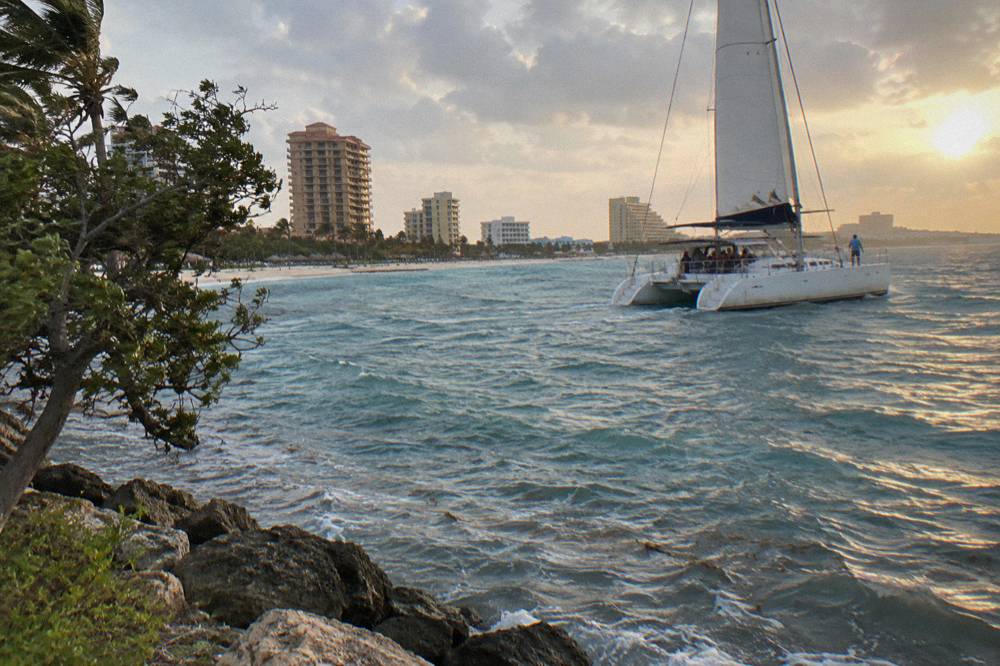
For a cruise passenger, this table is the difference between a workable evening ashore and a rushed one. The monthly breakdown in Aruba's sunset times by month covers the full calendar, and the deeper explanation of why the range is so small sits in why Aruba's sunset is earlier than expected.
| Period | Approximate sunset | What it means on a port day |
|---|---|---|
| Mid-January | 6:33 pm | Early sailings still catch full sunset |
| Mid-March | 6:50 pm | Comfortable margin after excursions |
| Mid-May | 6:57 pm | Long evening, dinner sail possible |
| Mid-July | 7:09 pm | Latest sunset, most schedule room |
| Mid-September | 6:41 pm | Sunset slips back quickly |
| Mid-November | 6:11 pm | Earliest sunset, choose a near-pier departure |
Should Cruise Passengers Add A Sunset Sail To A Port Day?
Many can, but only if the departure pier is close and the all-aboard time allows it: the Renaissance Marina departure point sits about 0.4 km from the cruise terminal as the crow flies, roughly an eight minute walk, while Pelican Pier on Palm Beach lies about 6.3 km from the marina as the crow flies. Always check the ship's all-aboard time before booking any sailing.
Ships vary, so the decision rule matters more than any single example: match the sailing's return time against all-aboard, and favor departures from the piers nearest the terminal when the margin is tight. The dedicated guide to sunset cruises for Aruba cruise ship passengers walks through the pier-by-pier logistics in detail.
The most reviewed sunset listing covered on this site is the Red Sail Sports catamaran sail with appetizers and open bar, 4.5 from 2,406 reviews, from $92 per person for two hours, departing Piet's Pier Bar on Palm Beach with free cancellation listed. Palm Beach is a taxi ride from the terminal rather than a walk, so it suits a ship with a later all-aboard time. A two-hour sunset sail leaving at 5:30 pm, a common slot among Aruba operators, returns around 7:30 pm, which fits some ships and not others.
For a tighter port-day budget, the Banana Adventure Catamaran tropical sunset sail from Segway Aruba runs from $50 per person for two hours, rated 4.8 from 141 reviews, departing MooMba Beach on Palm Beach with one-way transport to the boat included and free cancellation listed. The pickup direction is worth noting: transport goes to the catamaran, not back, so the return leg needs to be planned against the ship's clock.
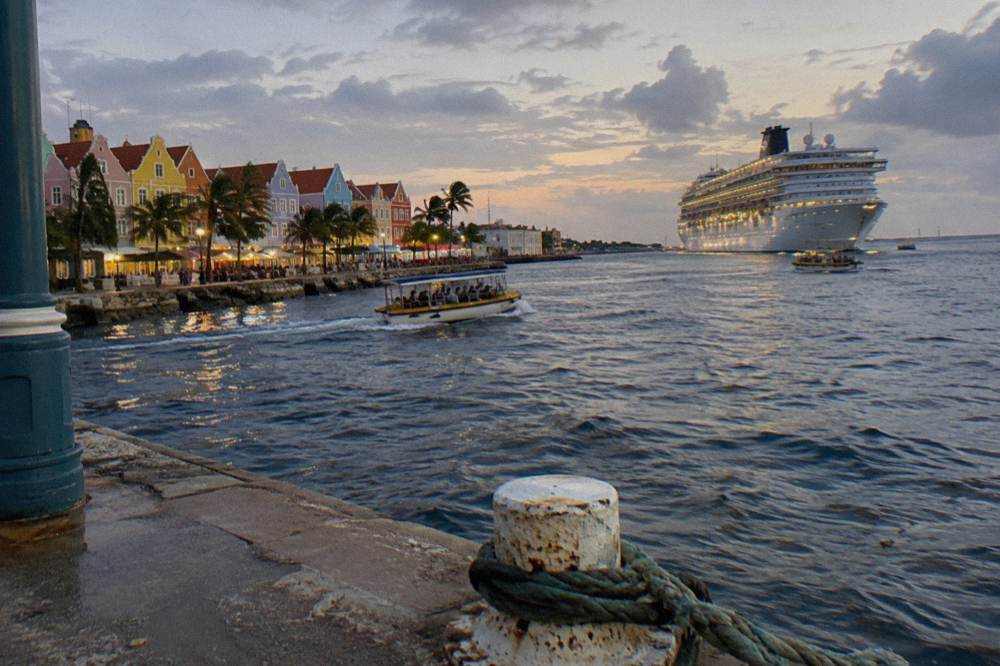
The natural pairing for a ship calling late, or overnights in port, is a dinner cruise. The Red Sail Sports dinner sail with open bar carries a 4.8 rating from 456 reviews, from $137 per person for three hours, with a three-course buffet, an open bar spanning local beer, cocktails, wine and sodas, and free cancellation listed; Check availability on the live listing, and read more in the site's Aruba sunset dinner cruise guide.
Which Trade-Offs Should Actually Drive The Choice?
Pick February through May for the driest, most reliable beach weather; June and July for the longest evenings and calmest sunset timing; and October through November for the lightest winds on the water, accepting a higher chance of a passing shower or a rescheduled boat tour. Summer calls trade a few extra rain millimeters for sunsets after 7 pm.
That framing avoids the usual mistake of treating Aruba like the rest of the Caribbean. On most islands September and October are the gamble months; on Aruba, the record shows no direct hurricane hit since 1851, and autumn rainfall, while real, arrives in short bursts under strong sunshine. Someone choosing a cruise week purely to maximize the odds of a calm evening sail might even prefer October: winds at their annual lightest, sea surface near its warmest at about 29 C.
One last planning note that crosses every month: tipping on Aruba boat tours is optional, and some bars and restaurants add a service charge of around 15 percent for groups that goes into a pool rather than to the server, a distinction the tourism authority's own tipping guide explains. Crews appreciate a tip but no listing here requires one.
Common Questions About The Best Month To Cruise To Aruba
What Is The Best Month To Cruise To Aruba?
February through May measures driest, with under five rainy days a month and monthly rainfall of 20 mm or less. June and July offer the latest sunsets, around 7 pm, which helps evening plans ashore. October and November bring the lightest winds of the year and the warmest sea, at the cost of more frequent showers.
Does Hurricane Season Affect Aruba Cruises?
Aruba sits outside the hurricane belt and has no recorded direct hurricane hit since 1851. The season, 1 June to 30 November, can still bring gusty wind, heavier rain or flat calms, and boat tours occasionally get rescheduled when advisories are issued, so check the cancellation terms on any tour listing.
What Is The Rainiest Month In Aruba?
November, averaging 87.1 mm of rain across about 9.6 rainy days, closely followed by December at 80.1 mm. Even so, November stays bright, and showers are typically brief rather than all day.
What Time Does The Sun Set In Aruba?
Between about 6:11 pm in mid-November and about 7:09 pm in mid-July. The spread across the entire year is only about 58 minutes because Aruba lies close to the equator and does not observe daylight saving time.
Can Cruise Passengers Do A Sunset Sail On A Port Day?
Sometimes. Two-hour sunset sails commonly depart around 5:30 pm and return near 7:30 pm, which fits some ships' all-aboard times and not others. Departures from Renaissance Marina are about an eight minute walk from the cruise terminal, while Palm Beach piers require a taxi each way. Always check the ship's all-aboard time before booking.
Is The Sea Warm Enough To Swim In Every Month?
Yes. Sea surface temperature around Aruba runs from about 26 C in February to about 29 C in October, a narrow range that keeps swimming comfortable year round.