Is It Rainy Season In Aruba Right Now?
Aruba's rainy season explained month by month, with rainfall averages, hurricane-season facts and what wet-season weather means for a sunset cruise booking.
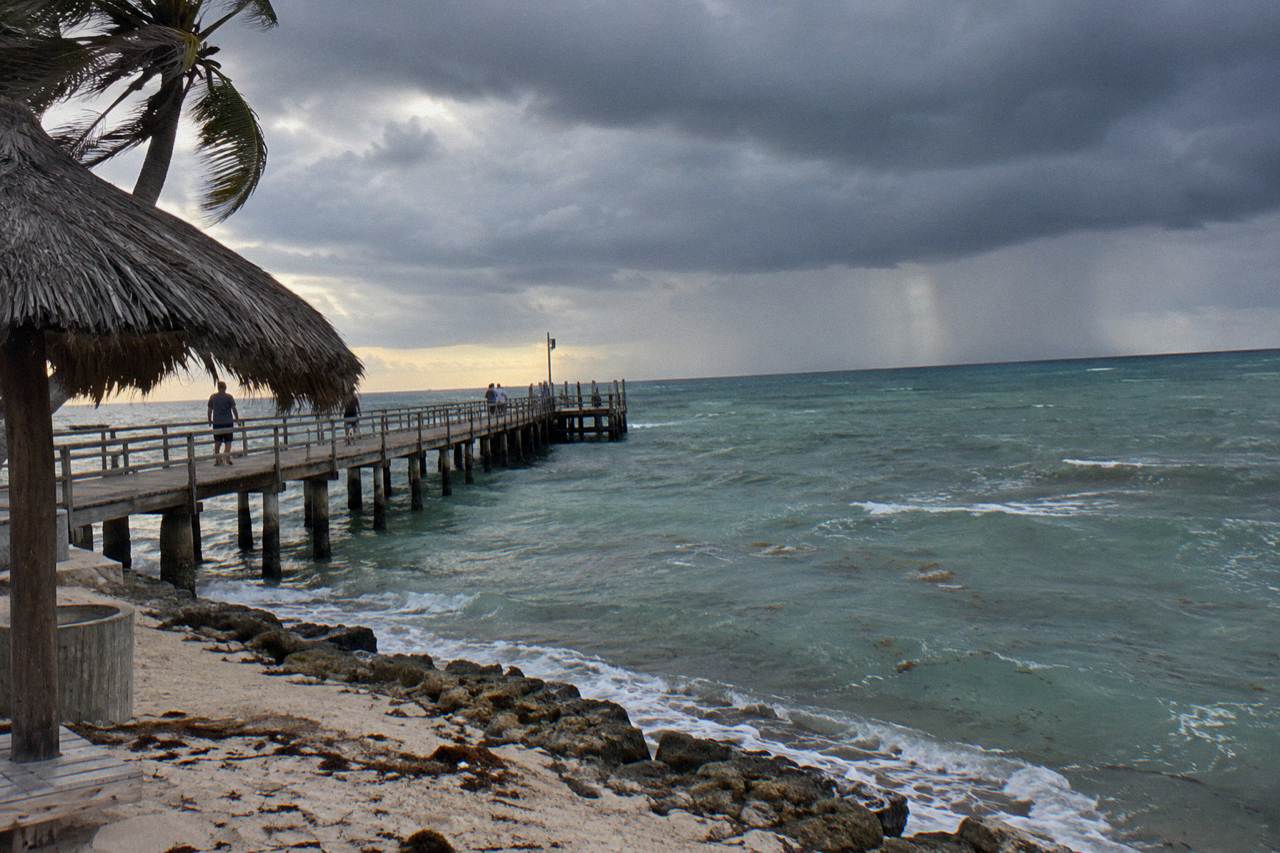
Aruba sits in the southern Caribbean, and its weather behaves differently from almost every other island travelers compare it to. The short answer to the question on this page is seasonal rather than daily: Aruba's rainy season runs roughly October through December, with November the wettest month of the year at an average of 87.1 mm of rain, against a yearly total of just 451.1 mm. That is still dry by Caribbean standards, and the island trades much of that rain for 3,410 hours of sunshine a year.
What follows is a planning guide built from official climate normals and published hurricane-season guidance, not a live weather report. Conditions on any given evening can only be read on the forecast, and the local authority, the Departamento Meteorologico Aruba, publishes a marine forecast that is worth checking in the day or two before a sail. If you are still deciding when to sail, the month by month guide to Aruba cruise weather covers sunset times, wind, and hurricane season in detail.
Whether it is rainy season depends on the month, not the day: Aruba's wet stretch runs roughly October to December, peaking in November with about 87.1 mm of rain and 9.6 rainy days on average, while the February-to-April window is markedly drier, March averaging just 10.0 mm and 2.0 rainy days. Even the peak months stay modest by regional standards, so season alone rarely rules out a sunset cruise.
The honest version of this answer has two parts. The first is the calendar: if the visit falls between October and December, it is statistically the wettest stretch of the Aruban year, and if it falls between February and April, it is the driest. The second part is that "wettest" in Aruba is a relative term. Oranjestad's 1991-2020 climate normals put November rainfall at 87.1 mm spread over about 9.6 days with at least 1 mm of rain, roughly a third of the month. Most days in that period still see no meaningful rain at all.
That is why this page refuses to say what the weather is doing "right now." A live answer would be stale within hours. What a reader booking an open-deck sunset sail actually needs is the seasonal shape of the island's weather plus a habit of checking the marine forecast in the final days before departure, and both are covered below.
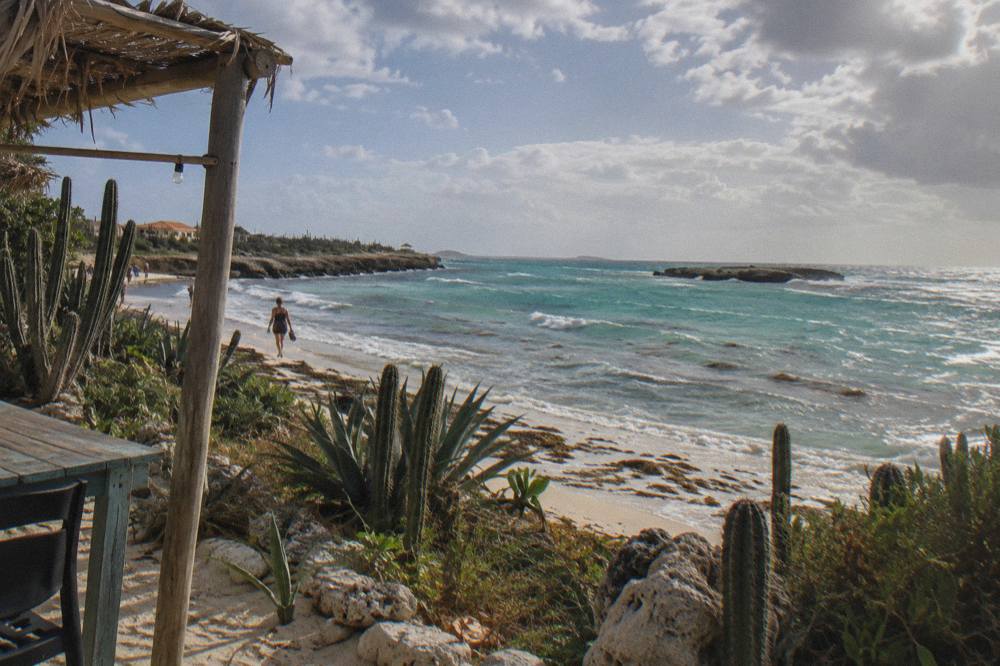
Because rain risk changes the kind of cruise worth booking, the format matters as much as the forecast. A covered or dinner-style boat gives shelter options an open catamaran net does not, which is one reason dinner cruises hold their appeal in the October-to-December window. The 4-Course Dinner Cruise by Pelican Adventures, sailing from Pelican Pier for 3 hours from $180 per person, is one such option, and the seasonal logic behind choosing it is covered in the sunset dinner cruise guide.
When Is Rainy Season In Aruba?
Aruba's rainy season centers on October, November and December, when monthly rainfall averages 76.5 mm, 87.1 mm and 80.1 mm respectively, and rainy days climb to 7.3, 9.6 and 11.0 per month. A shorter, lighter wet bump appears in August and September, while January sits in between at 44.0 mm. Everything from February through July is comparatively dry.
Those figures come from the Departamento Meteorologico Aruba's 1991-2020 climate normals for Oranjestad, published by the met service and the standard reference for the island's climate. Two patterns are worth pulling out of the numbers. First, the wet season is real but short: three months carry more than half the island's annual rain. Second, the shoulder months are gentler than the peak, so a late-September trip sits in a different risk bracket than a mid-November one even though both fall inside the broad wet half of the year.
The mechanism is straightforward. Through the northern-hemisphere autumn, tropical waves and early-season fronts occasionally reach far enough south to disturb the usual trade-wind pattern, dropping brief, heavy showers rather than long gray stretches. Aruba's hot semi-arid classification, around 500 mm of rain a year in total, reflects how rarely those systems arrive with force. When they do, the island's Department of Meteorology issues advisories, and small-craft advisories do happen.
For cruise planning, the practical read is that rainy-season showers tend to arrive in short bursts, and the evening sailing window often clears between them. That is a tendency, not a promise, and the marine forecast is the arbiter.
What Do The Monthly Rainfall Numbers Look Like?
March is the driest month at 10.0 mm of rain and 2.0 rainy days on average, and April follows at 8.6 mm and 1.5 rainy days, while November is the wettest at 87.1 mm and 9.6 rainy days. Monthly rainfall spans roughly a ten-to-one range between the April low and the November high, which is the single most useful statistic for choosing travel dates.
| Month | Avg rainfall (mm) | Avg rainy days (1 mm+) |
|---|---|---|
| January | 44.0 | 10.8 |
| February | 19.5 | 4.5 |
| March | 10.0 | 2.0 |
| April | 8.6 | 1.5 |
| May | 14.1 | 1.7 |
| June | 17.4 | 2.8 |
| July | 19.6 | 4.1 |
| August | 31.4 | 3.1 |
| September | 42.9 | 3.3 |
| October | 76.5 | 7.3 |
| November | 87.1 | 9.6 |
| December | 80.1 | 11.0 |
One nuance the table hides: January's 44.0 mm over 10.8 rainy days describes many small, light showers rather than a few soakers, while August's 31.4 mm over just 3.1 rainy days describes the opposite, occasional brief downpours. Travelers who dread being rained on at all should notice that August actually has fewer wet days than July. Travelers who dread heavy rain should look at the millimeter column, where the autumn months dominate.
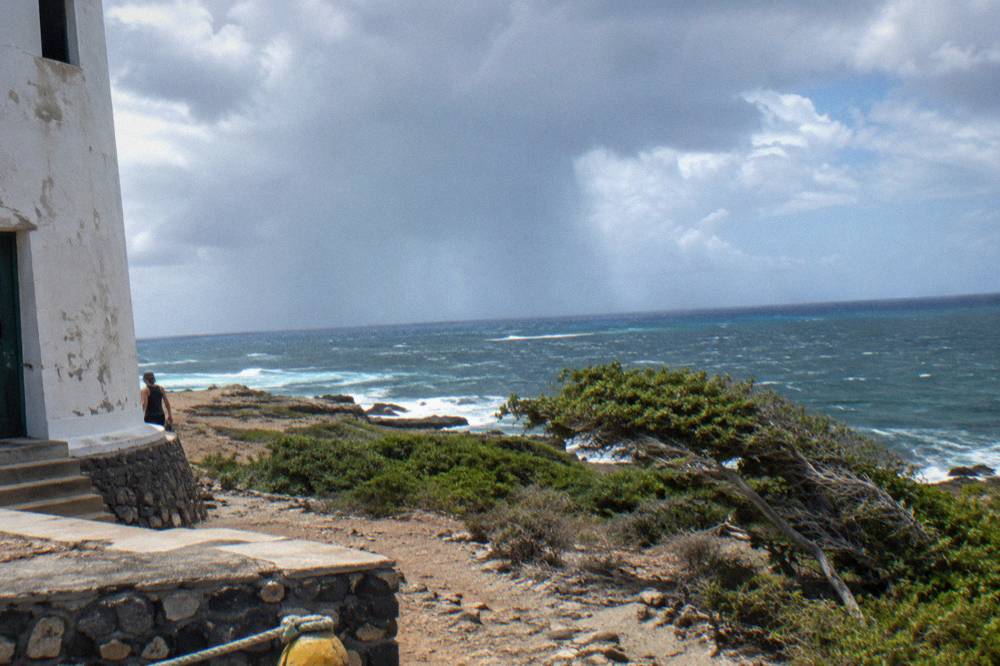
Sunshine holds up across the whole year, which surprises visitors expecting a Caribbean wet season to mean gray weeks. The normals record 3,410 hours of sunshine annually, with the lowest monthly mean in November, and even that month averages well over two hundred hours of sun. Daily maximum temperatures run from 30.3 C in January to 33.2 C in August and September, so the wet season is not cool, it is simply occasionally wet.
Does Hurricane Season Mean Rainy Season In Aruba?
Not exactly: the Atlantic hurricane season runs 1 June to 30 November, overlapping Aruba's rainiest months, but the island sits outside the main hurricane belt and the Atlantic hurricane database shows no direct hurricane hit since 1851. Hurricane-season weather in Aruba mostly means a chance of gusty wind, more rain, or occasionally a stretch of no wind at all.
The Aruba Tourism Authority states plainly that Aruba lies outside the hurricane belt, and the historical record backs the claim: the nearest memorable passes were Ivan in 2004, well north of the island with high waves, and Felix in 2007, about 80 km away with rough seas. Neither made landfall on Aruba. The honest framing, which the tourism authority itself uses, is that hurricane season can still bring unsettled weather even to an island that hurricanes historically miss.
For a sunset sail, the more relevant hazard is wind and sea state, not rain. A distant tropical wave can push swell onto exposed coasts while the sky over Palm Beach stays clear, and operators cancel or reroute on sea state more often than on showers. The Departamento Meteorologico Aruba publishes a standing marine forecast covering wind, sea state and wave heights by coastal section; the met service's marine page is the primary source worth bookmarking before any boat booking, at the DMA marine forecast. The tourism authority's hurricane-season guidance is the other reliable reference for season-level planning.
A related seasonal note for evening plans: sunset times shift across the year, from about 6:11 pm in mid-November to about 7:09 pm in mid-July, a spread of roughly 58 minutes. Wet-season travelers sail earlier in the evening than summer travelers, which matters for dinner reservations and for how warm the boat feels underway. If that small shift surprises you, our explanation of why the sunset runs on such a tight schedule in Aruba shows how the island's spot near the equator keeps evening light remarkably steady year-round.
How Do Trade Winds Change With The Seasons?
The east-northeast trade winds blow all year, but with a clear seasonal cycle: June is the windiest month at a mean of 8.7 m/s (about 17 knots) and October and November the calmest at 5.8 m/s (about 11 knots), based on 1981-2010 airport normals. Rainy season therefore coincides with the lightest winds of the year, which changes the feel of a sailing cruise more than the rain does.
That inversion catches many planners off guard. The months with the highest rain risk are also the months with the least wind, so an October or November catamaran sail is more likely to be motoring gently along in calm air than heeling through spray. Sails go up when the wind allows and stay furled when it does not; crews decide on the evening, and neither version is unusual in the wet months.
The interplay has a second-order effect on heat. Breeze is Aruba's natural air conditioning, and November's low winds plus daily maximums still above 30 C can make a windless evening on deck feel warmer than a July one, despite July being about four knots windier. Guests who run warm may prefer an evening with moving air; the trade-off is that stronger wind means a livelier deck and occasionally a wetter one.
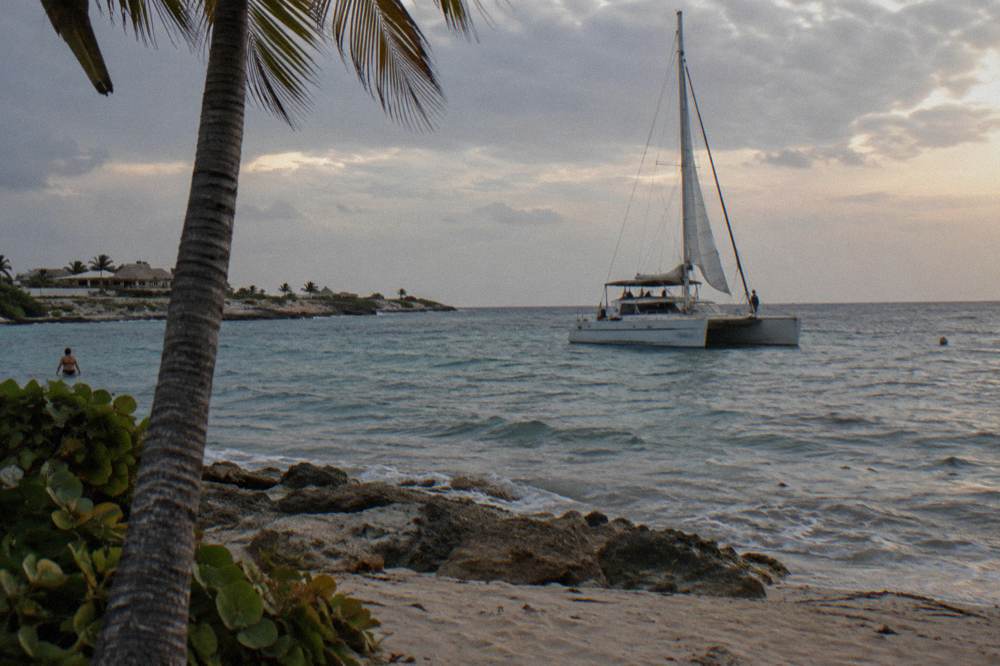
Sea surface temperature adds one more seasonal layer, running from about 26 C in February to about 29 C in October, so the rainy-season sea is actually the warmest of the year. For snorkel-and-sunset combinations, that is a point in the wet months' favor. The snorkel and sunset combo guide covers how those trips structure the swim stop relative to the sail home.
A calm-evening format suits this season well. The 2-Hour Sunset Sailing Excursion by De Palm Tours leaves from De Palm Pier with an open bar and snacks, from $114 per person, carrying a 4.7 rating from 82 reviews.
Should Rain Risk Change Which Cruise You Book?
Yes, modestly: in the wetter months a boat with seating away from spray and rain, a dinner format, or a shorter two-hour sail all reduce weather exposure. Booking flexible first, then watching the forecast, beats gambling on any single evening.
The format choices break down cleanly. Open-deck catamarans with trampoline nets are the most exposed: fun in dry air, wet in a shower, and they are also the listings where a breeze matters most for cooling. Pontoon and schooner formats sit lower and slower. Dinner cruises, especially those with interior or covered seating, keep the evening salvageable through a passing shower, since the meal and music carry the experience even if the horizon dims. The rain and trade winds guide for boat tours goes deeper on picking a boat for the season.
Timing flexibility matters too. Travelers staying a full week in November can afford to book the first suitable evening and rebook if the forecast turns, while visitors on a two-night stop have less slack and should front-load the forecast check. Cruise-ship passengers face the tightest constraint of all and should compare the sail's return time against their ship's all-aboard time rather than trusting a general rule, a point the sunset cruise guide for cruise passengers covers in detail.
One seasonal advantage worth claiming in the wet months: sunset over open water is a light show, not a rainfall show, and the months with passing clouds often produce the most dramatic color. Clear-air sunsets can be flat; scattered cloud catches the color. No operator can or does promise any particular sky.
For an evening that works even if a shower passes through, a dinner sail with live music keeps its appeal regardless of sky. The Sunset Sail with Caribbean Dinner and Live Music by Red Sail Sports runs 2 hours 30 minutes from $109 per person, rated 4.7 from 278 reviews, departing Piet's Pier Bar with a Caribbean-inspired buffet and an open bar, and free cancellation is listed.
How To Check The Weather Before Your Sail
Check the Departamento Meteorologico Aruba marine forecast within 48 hours of departure for wind, sea state and any small-craft advisory, then confirm the operator's cancellation and rebooking terms on the live listing before finalizing. Treat climate averages as a planning tool and the marine forecast as the decision tool; the two answer different questions.
The marine forecast is more useful to a boat passenger than the general weather page because it breaks the coast into sections: sheltered, exposed south, and the east-to-northwest stretches that take the open-water swell. Advisory language matters most of all: when the met service advises small craft to exercise caution, sunset sails are exactly the small craft being described.
The order of operations for a wet-season booking is then simple. Book a flexible listing early. Around two days out, read the marine forecast for the departure evening. If it looks poor, contact the operator or use the listed free cancellation and move to another evening. On the day, arrive at the pier with the buffer the operator states, typically around 30 minutes before departure, dressed in something that tolerates spray, and with mineral sunscreen rather than an oxybenzone formula, which Aruba has banned from sale on the island since 1 July 2020.
Packing for the season deserves one honest sentence: a light rain shell earns its space in October through December, and a dry-bag for phones costs little. Neither suggests expecting a washout, only respecting that the island's wettest quarter still delivers most of its sun.
Seasonal timing is only one input among several, and travelers weighing it against prices and sunset times can compare the whole calendar in the best month for sunset cruises breakdown. On Aruba Sunset Cruises, the operator pages carry each listing's own departure details, inclusions and cancellation terms, which is where the forecast meets the booking.
Common Questions About Rainy Season In Aruba
Is It Rainy Season In Aruba Right Now?
It depends on the month of the visit, and no static page can answer for a specific day. The wet stretch runs roughly October through December, peaking in November at 87.1 mm of rain on average, while February to April is the driest window. Check the Departamento Meteorologico Aruba marine forecast close to the travel date for actual conditions.
What Is The Rainiest Month In Aruba?
November, averaging 87.1 mm of rain and 9.6 rainy days, closely followed by December at 80.1 mm. Even so, November averages well over two hundred hours of sunshine, so the month is far from a washout.
Does Rainy Season Affect Sunset Cruises?
Usually only at the margin. Showers tend to arrive in short bursts rather than long stretches, and sunset sailings often go ahead between them. Operators decide on sea state as much as rain, and listings with free cancellation listed allow a weather-driven change of plan without cost if handled before the cutoff.
Is Aruba In The Hurricane Belt?
No. The Aruba Tourism Authority states the island lies outside the hurricane belt, and the Atlantic hurricane database shows no direct hurricane hit since 1851. The season from 1 June to 30 November can still bring gusty winds, extra rain or calm spells.
Which Months Are Best For A Sunset Cruise In Aruba?
February through April offers the lowest rain risk and modest winds, while October and November offer the calmest winds and the warmest sea. Summer months bring later sunsets, near 7:09 pm in mid-July, and the strongest winds of the year. The right month depends on whether calm, dry or long evenings matter most.
Do Sunset Cruises Get Cancelled For Rain?
Sometimes, but sea state and advisories cancel more sails than rain itself. When the met service issues a small-craft advisory, operators typically postpone rather than sail. Check the listing's cancellation terms when booking so a postponement is a rebooking rather than a loss.