Why Is The Sunset Earlier In Aruba?
Aruba sits deep in the tropics near the equator, so its sunset barely moves all year. Here is why the sun sets around 6 pm in November and after 7 pm in July, and what that means for booking a cruise.
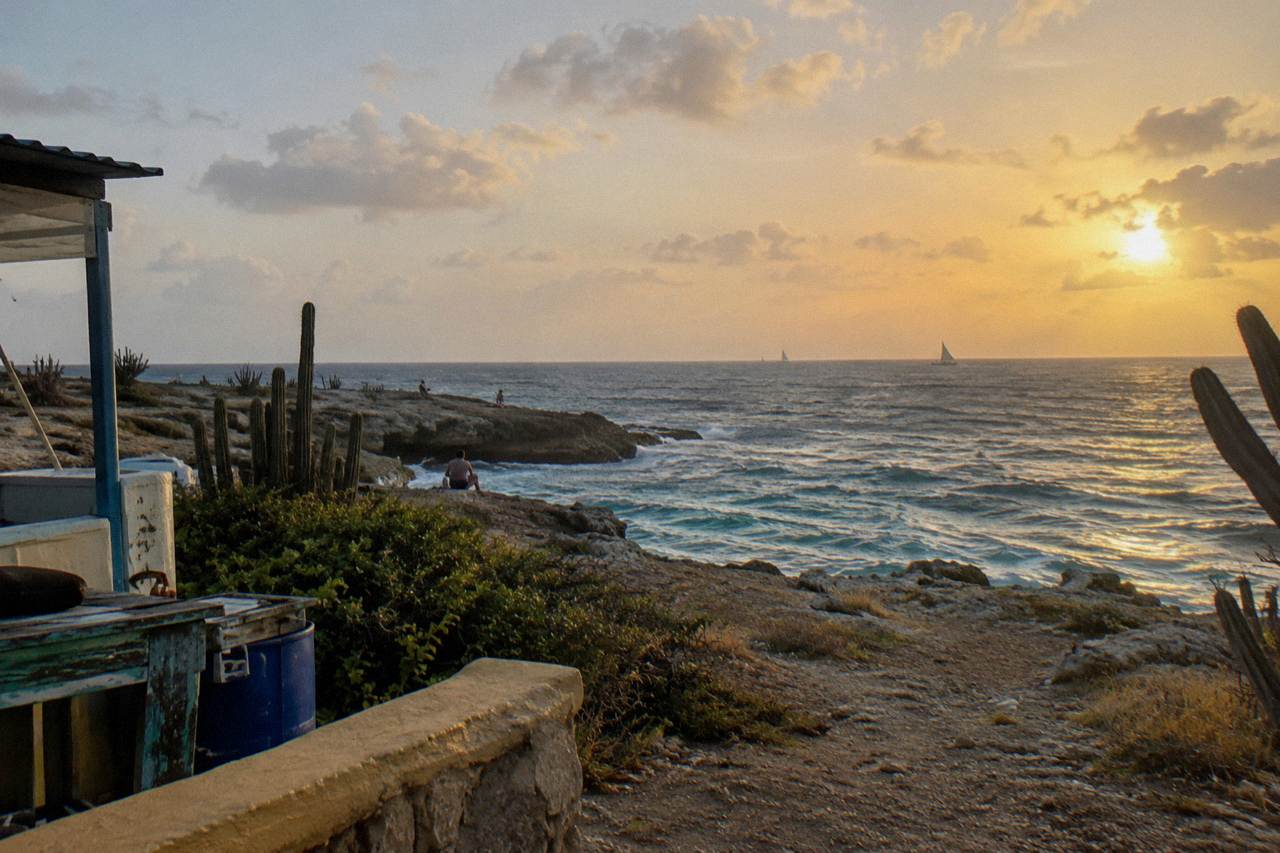
The sun sets earlier in Aruba than most visitors expect because the island sits at roughly 12 degrees north latitude, deep in the tropics, where the seasonal swing in sunset time is small. Sunset lands around 6:11 pm in mid November and 7:09 pm in mid July, a spread of roughly 58 minutes. Aruba also skips daylight saving time entirely, so no October clock change pushes the sunset later.
The surprise usually hits travelers from the northern United States, Canada or Europe. In summer, those latitudes enjoy sunsets well past 8 pm, sometimes past 9 pm, because the long tilt of the northern hemisphere toward the sun stretches the day unevenly. Aruba, sitting a little over twelve degrees above the equator, gets no such dramatic stretch. The moment the sun drops below the horizon stays pinned inside a narrow window centered on a bit after 6 pm.
The second half of the answer is the clock, not the sky. Aruba stays on Atlantic Standard Time, UTC-4, all year. There is no spring forward and no fall back. When a visitor's home city "gains" or "loses" an hour of evening daylight by moving its clocks, Aruba's evening stays exactly where it was. The result is a sunset that feels startlingly early in December to someone from New York, and pleasantly reasonable in July to someone from London.
There is a third, subtler piece that most first pages of search results skip: the equation of time. Earth's orbit is slightly elliptical and its axis is tilted, so solar days run a touch ahead of and behind clock time through the year. In the tropics, where the daylight length barely changes, this offset becomes the dominant force moving sunset back and forth. It is why Aruba's earliest sunset of the year lands in mid November, weeks before the shortest day of the year in late December.
For anyone turning this astronomy into a booking, three cruises make an easy shortlist.
The Happy Hour Sunset Sail from Octopus Aruba is the featured pick here: 2 hours from $89.99 per person with an open cocktail bar, rated 4.7 from 1,880 reviews. The Banana Adventure Catamaran runs from $50 per person with one-way pickup to the boat, and De Palm's 2-hour sailing excursion from De Palm Pier starts at $114 per person with an open bar.
What Time Does The Sun Set Each Month?
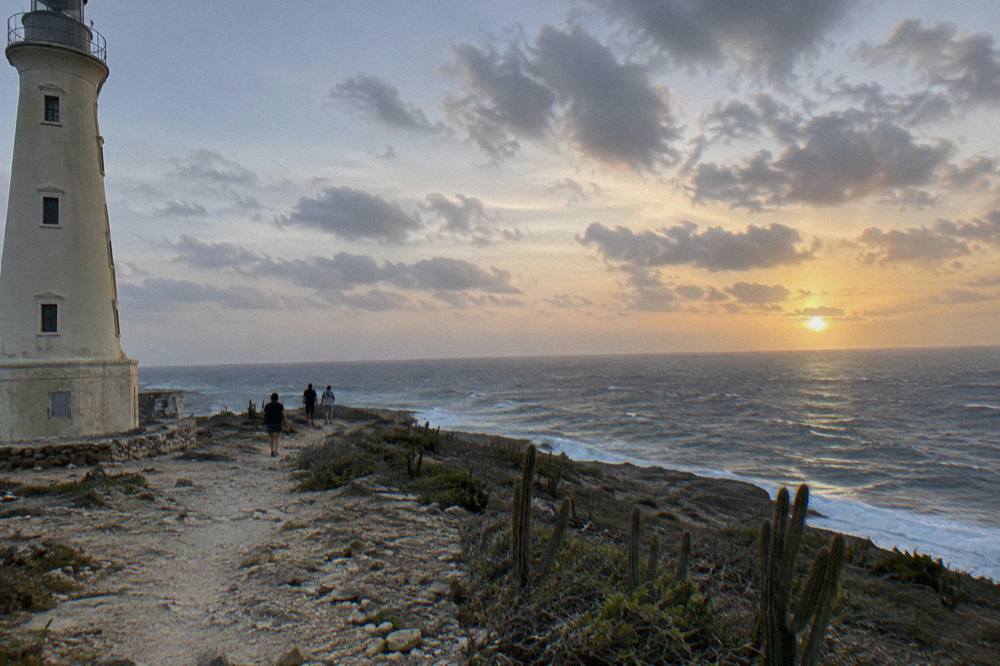
On the 15th of each month, sunset in Aruba runs from about 6:11 pm in November to about 7:09 pm in July. The earliest stretch of the year is late October through November, and the latest is June through July. Every figure below is for the 15th of the month; nearby days shift by a minute or two.
| Month | Sunset on the 15th |
|---|---|
| January | around 6:33 pm |
| February | around 6:46 pm |
| March | around 6:50 pm |
| April | around 6:52 pm |
| May | around 6:57 pm |
| June | around 7:06 pm |
| July | around 7:09 pm |
| August | around 7:00 pm |
| September | around 6:41 pm |
| October | around 6:21 pm |
| November | around 6:11 pm |
| December | around 6:17 pm |
Two patterns jump out of that table. First, the whole range fits inside a single hour. A traveler who visits in April and again in September sees nearly identical sunsets, something no one from a high latitude would experience at home. Second, the extremes are not where intuition puts them. The latest sunset is in July, as expected, but the earliest sunset is in November, not on the winter solstice in December. By late December sunset is already creeping a few minutes later again.
The table also explains why cruise departure times feel so different across the year. A 5:30 pm boarding in July happens in full afternoon glare, with well over an hour of sun left. The same 5:30 pm boarding in November catches the sun already low and orange. Same clock time, completely different light. For the month-by-month detail, the guide to sunset times across the year breaks it down further, and the piece on golden hour timing in Aruba covers the hour of soft light before the drop.
The featured cruise on this site lines up well with that table. Octopus Aruba's Happy Hour Sunset Sail, a 2-hour trip from $89.99 per person aboard a 40-foot trimaran with an open cocktail bar and appetizers, departs from the operator's beach hut on J.E. Irausquin Boulevard in Palm Beach. It holds up to 34 guests, the listing includes a certified first responder among the crew, and free cancellation is listed.
Latitude, The Equation Of Time, And Why November Is Earliest
Aruba's latitude, roughly 12 degrees north, keeps day length nearly constant, so the equation of time, a wobble created by Earth's elliptical orbit and tilted axis, becomes the main thing moving sunset. That wobble pushes solar noon earlier in November, dragging the earliest sunset weeks ahead of the shortest day.
Picture the year as two overlapping rhythms. The first rhythm is day length, set by latitude and the tilt of Earth's axis. At roughly twelve degrees north, Aruba's day length swings only between roughly 11 and 13 hours across the year. Compare that with a city at 45 degrees north, where day length spans roughly 9 to 15 hours, and the size of the tropical effect becomes clear. Latitude alone would give Aruba a sunset that moves perhaps half an hour either side of 6:30 pm.
The second rhythm is the equation of time. Because Earth moves faster in its orbit when closer to the sun and slower when farther away, and because the sun's path is measured against a tilted axis, the true solar day sometimes runs long and sometimes short. Clocks average this out, so the real sun ends up ahead of or behind the clock by up to about 15 minutes depending on the season. Near the equator, where day length barely moves, that 15 minute shove is the bigger lever. In November, solar noon arrives early, and solar noon arriving early means sunrise and sunset both arrive early. The shortest day still waits for late December, but the earliest sunset is already over by then.
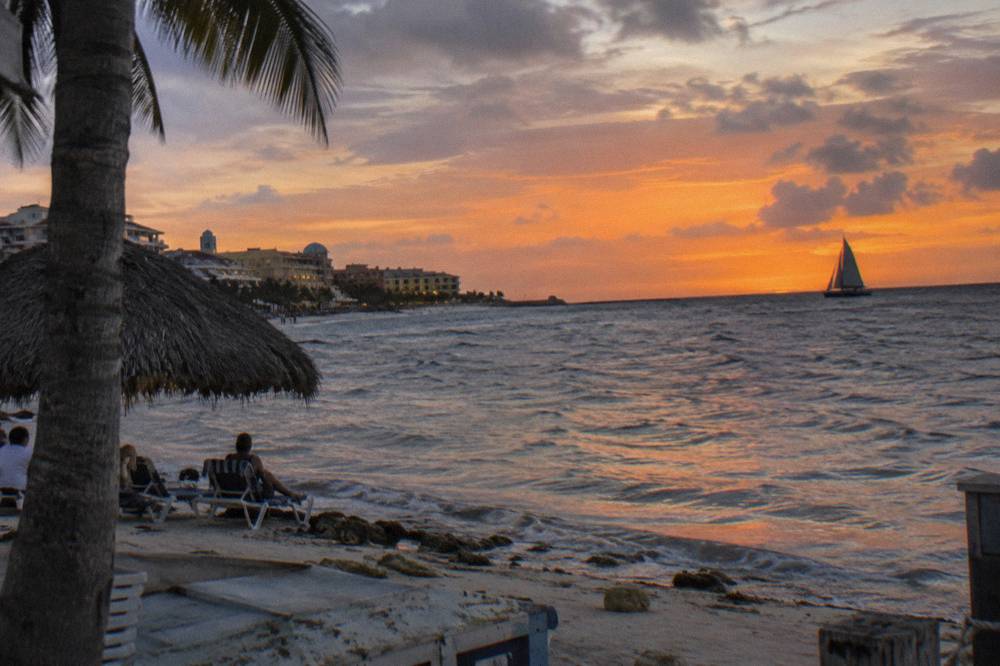
This is the piece of the answer a standard search result usually fumbles. Sites will say "Aruba is near the equator so sunsets are around 6 pm," which is true but incomplete. The near-equator location explains the small swing; the equation of time explains why November beats December for the earliest sunset, and why mid February sunsets land at 6:46 pm even though day length is already growing. Aruba's climate data bears out the tropical pattern in other ways too: the island gets about 3,410 hours of sunshine a year, with monthly mean daily maxima ranging from 30.3 C in January to 33.2 C in August and September, figures documented in the Oranjestad climate normals.
Does Aruba Change Its Clocks For Daylight Saving?
No. Aruba observes Atlantic Standard Time, UTC-4, year round and has no daylight saving switch. That fixed clock means the island's sunset time reflects only the sun's actual behavior, never a political adjustment of the clocks, which is why November sunsets feel abrupt to visitors whose home countries just fell back.
This fixed clock matters more than it sounds. In late October and early November, the United States and Europe end daylight saving time, shifting an hour of evening light into the morning. A traveler from those places arrives in Aruba having just watched their home sunset jump from around 6:15 pm to around 5:15 pm, then lands on an island where sunset sits at 6:15 pm and never moves for anyone's convenience. The clocks at home are synthetic; the clock in Aruba tracks the sun with almost no seasonal interference.
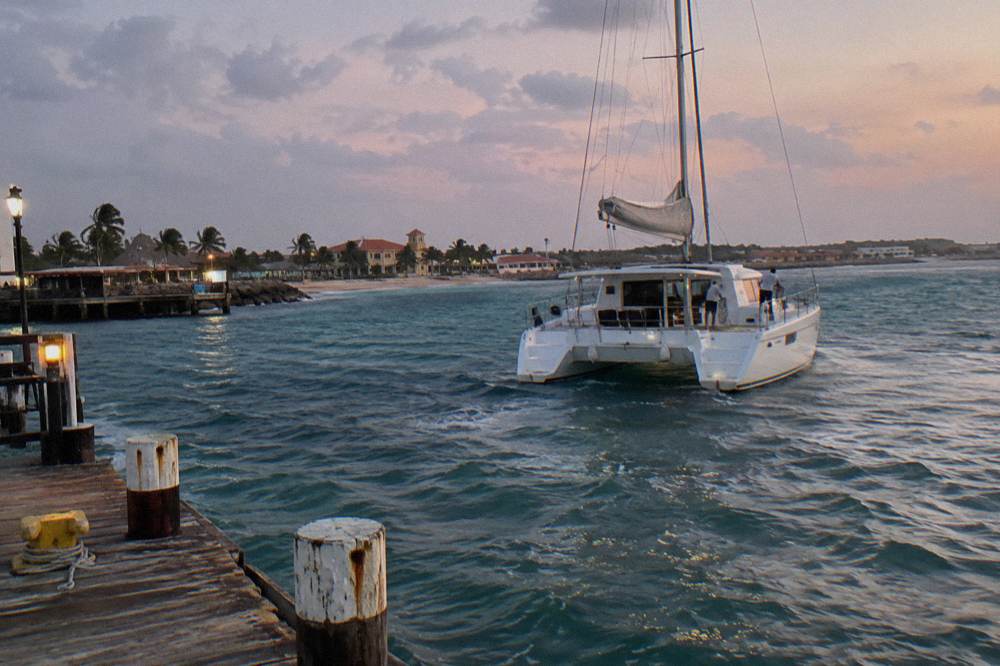
For cruise planning, the fixed clock is a small gift. A departure time printed on a listing means the same thing in every season, so a 5:30 pm sail is always positioned sensibly against the sunset table above. It also removes one common travel mistake: assuming Aruba "falls back" in November and budgeting an extra hour that does not exist. The island keeps UTC-4 through December, January and every other month, so the only variable is the sun itself.
Why Sunset Cruise Departure Times Track The Sun
Jolly Pirates, Pelican and Red Sail list 5:30 pm departures, so the boat is on the water with the sun still up, because the sun sets between about 6:11 and 7:09 pm year round. The same 5:30 pm start delivers very different light in July versus November.
| Cruise | Departure timing | Duration |
|---|---|---|
| Pelican Adventures sunset catamaran, Pelican Pier | 5:30 pm | 2 hours |
| Jolly Pirates sunset sail, MooMba Beach | 5:30 to 7:30 pm | 2 hours |
| Red Sail Sports catamaran sunset sail, Palm Beach | 5:30 to 7:30 pm on select days | 2 hours |
| Red Sail Caribbean Dinner Sail | Tuesdays, 5:30 to 8:00 pm | 2 hours 30 minutes |
The pattern is consistent across operators because the physics is consistent. A 2-hour cruise that wants an hour of pre-sunset sailing and an hour of dusk needs to leave roughly 90 minutes before local sunset. In July that means a 5:30 pm departure sails out in bright light and returns in the last of the glow. In November the same departure catches the sun already nearing the horizon, and the return leg happens under stars. Neither is wrong; they are different products wearing the same departure time, and knowing the sunset table tells you which one you are buying.
The Jolly Pirates sunset sail boarding detail comes from the operator's own cruise page, which also notes arriving 30 minutes early. Anyone weighing how much boat time to buy can compare options in the guide to how long a sunset cruise lasts in Aruba.
Among the listings covered here, De Palm's open-bar sail on the Palm Pleasure catamaran illustrates the timing logic well. It runs 2 hours from $112 per person, is rated 4.5 from 392 reviews, boards at De Palm Pier between the Hilton and RIU on Palm Beach, carries up to 80 guests, and lists free cancellation.
With a departure pegged to the daylight window, the bigger boat simply means more room to move between the shaded deck and the rail as the light drops.
What About Cloud, Rain And The Trade Wind Season?
Aruba's sunset time is astronomical and exact, but sunset quality varies with the season: October through December average 76.5 to 87.1 mm of rain each, versus about 9 to 14 mm from March through May. The island sits outside the hurricane belt, with no direct hurricane hit since 1851, though hurricane season runs 1 June to 30 November.
None of this moves the clock. The sun sets at 6:11 pm in mid November whether the sky is clear or carrying shower cloud. What changes is the experience on deck. Aruba's rainy season is modest by Caribbean standards, October averaging 76.5 mm and November 87.1 mm against March's 10.0 mm, and even those months average fewer than 10 rainy days each. Mean sunshine runs from 248.4 hours in November to 305.3 in July, so even the cloudiest month delivers plenty of usable evening light. The Aruba Tourism Authority notes the island lies outside the hurricane belt and that the Atlantic hurricane database shows no direct hit since 1851, while cautioning that hurricane season, 1 June to 30 November, can still bring gusty winds, extra rain, or spells with no wind at all.
The trade winds follow their own calendar, per the Departamento Meteorologico Aruba climatological normals: monthly mean wind speeds peak in June at 8.7 m/s and bottom out in October and November at 5.8 m/s. For a sunset sail that means summer trips tend to have fuller sails and a livelier ride, while late autumn trips drift more and feel calmer. Neither month is a wrong month; they are different sails.
Marine advisories do happen, and cruises can be rescheduled when the sea turns rough. The practical rule is simple: watch the forecast a day or two ahead, and know which listings carry free cancellation, since most shared sails on this site list it while a couple of private and pirate-ship options do not state it.
One more tropical detail worth carrying onto the boat: Aruba bans sunscreens containing oxybenzone, so a mineral sunscreen is the compliant choice for faces and shoulders on the ride out.
Common Questions About Sunset Times In Aruba
Why Is The Sunset Earlier In Aruba?
Aruba sits at roughly 12 degrees north latitude, close to the equator, so its sunset barely moves all year, roughly 6:11 pm in mid November to 7:09 pm in mid July. Compared with high-latitude summer evenings, that year-round window around 6 to 7 pm feels early, and because Aruba keeps UTC-4 with no daylight saving, nothing ever pushes it later.
What Month Has The Earliest Sunset In Aruba?
November. Sunset on 15 November lands around 6:11 pm, the earliest of the year, and it happens weeks before the shortest day in late December because the equation of time pushes solar noon early in November.
Does Aruba Observe Daylight Saving Time?
No. Aruba stays on Atlantic Standard Time, UTC-4, all year, so sunset times change only with the sun's actual behavior, never with a clock adjustment.
How Much Does The Sunset Time Change Across The Year In Aruba?
Only about 58 minutes between the earliest sunset, around 6:11 pm in mid November, and the latest, around 7:09 pm in mid July. The seasonal swing is small because the island lies deep in the tropics.
Why Do Aruba Sunset Cruises Leave At 5:30 Pm?
A 5:30 pm departure puts a 2-hour cruise on the water with the sun still up in every month of the year, since sunset always falls between about 6:11 and 7:09 pm. The same departure delivers brighter sailing in July and closer-to-dusk light in November.
Is The Rainy Season A Bad Time For A Sunset Cruise?
Not necessarily. October through December are Aruba's wettest months, but each still averages fewer than 10 rainy days, and the island sees about 3,410 hours of sunshine a year. Sunset times are unaffected; check the forecast and favor listings with free cancellation.