What Time Is Golden Hour In Aruba?
Golden hour in Aruba starts roughly an hour before sunset, between about 5:10 pm in November and 6:10 pm in July. Here is the month by month timing and how to pick a cruise that catches it.
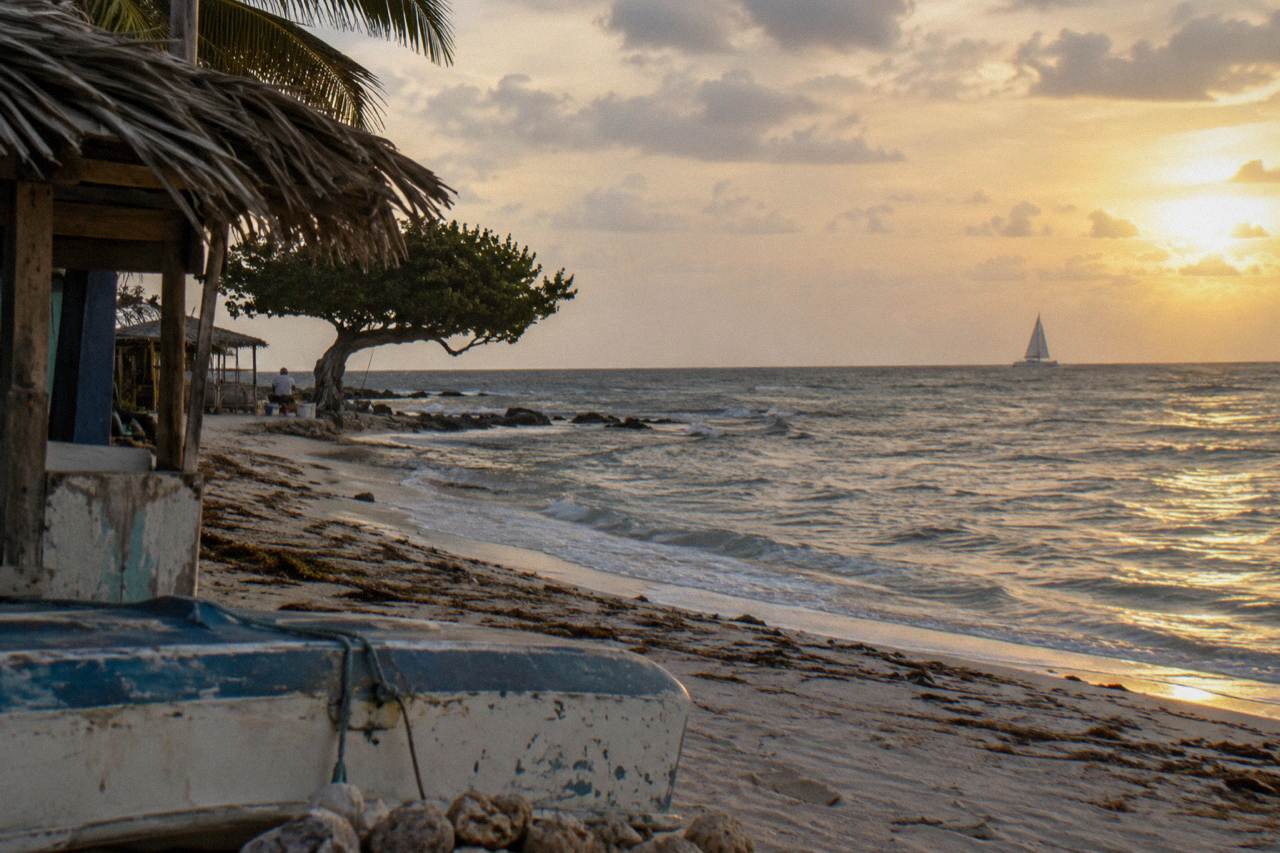
Golden hour in Aruba spans the hour before sunset, and since sunset falls between roughly 6:11 pm in mid November and 7:09 pm in mid July, golden hour starts between about 5:10 pm and 6:10 pm depending on the season.
That wide swing surprises people. The astronomical data for the island puts sunset at 6:33 pm on 15 January, 7:09 pm on 15 July, and 6:11 pm on 15 November, a spread of about 58 minutes. Treat those as "around" values: the exact minute shifts a little every day. To understand why an island this close to the equator still sees that much drift, read our explanation of why the sun sets earlier in Aruba during the fall months.
Photographers usually split golden hour into two phases. The first hour before sunset gives long, warm sidelight on faces, boats and water. The last fifteen to twenty minutes, sometimes called the sweet spot, turns the sky gold and then pink, and this is the window most sunset cruises are timed around. After the sun disappears you still get twenty to thirty minutes of usable pastel glow, which is when the best wide shots of rigging against a colored sky tend to happen.
The month by month table below uses the astronomical sunset times for the 15th of each month and works backward one hour to give a practical golden hour start. For any other date, take the sunset time and subtract an hour.
| Month | Sunset (approx.) | Golden hour starts (approx.) |
|---|---|---|
| January | 6:33 pm | 5:33 pm |
| February | 6:46 pm | 5:46 pm |
| March | 6:50 pm | 5:50 pm |
| April | 6:52 pm | 5:52 pm |
| May | 6:57 pm | 5:57 pm |
| June | 7:06 pm | 6:06 pm |
| July | 7:09 pm | 6:09 pm |
| August | 7:00 pm | 6:00 pm |
| September | 6:41 pm | 5:41 pm |
| October | 6:21 pm | 5:21 pm |
| November | 6:11 pm | 5:11 pm |
| December | 6:17 pm | 5:17 pm |
Aruba keeps UTC-4 all year with no daylight saving shift, so these times hold steady against your hotel clock. Visitors from North America and Europe should double check the offset in winter, when the time difference to home changes but Aruba's clock does not.
How Does Golden Hour Shift Month To Month?
The pattern follows two humps: sunset gets later every month from January through July, peaking at about 7:09 pm in mid July, then pulls back earlier through autumn to its earliest point of about 6:11 pm in mid November. December recovers slightly to 6:17 pm. The practical difference between a July cruise and a November cruise is a full hour of departure timing.
Spring is the flattest stretch. March, April and May sunsets sit within seven minutes of each other, all between 6:50 and 6:57 pm, so a cruise habit that works in March works in May.
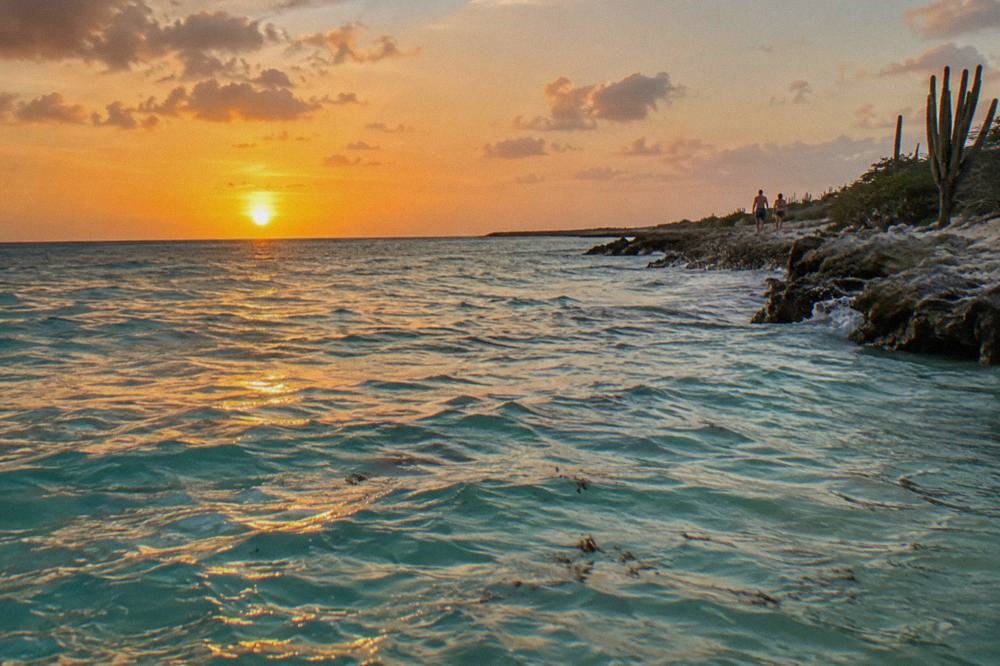
Autumn moves fast. Sunset slides from 7:00 pm in mid August to 6:41 pm in September, 6:21 pm in October and 6:11 pm in November, losing roughly fifty minutes in three months. Anyone planning around October or November should book the earliest departure offered and treat the published sunset time as a hard deadline.
Which Cruise Departure Actually Catches The Light?
Most Aruba sunset cruises are built as two hour sails timed to end at or just after sunset. The operators that publish a departure time list 5:30 pm, which keeps the boat on the water through the last hour of light for most of the year. Always confirm the exact time on the live booking page before you go.
Jolly Pirates lists its Aruba sunset sail from 5:30 to 7:30 pm, boarding at MooMba Beach, and Pelican Adventures runs a 5:30 pm catamaran departure from Pelican Pier. In November, when the sun sets around 6:11 pm, a 5:30 pm departure still works: the boat is on the water for the entire last hour of light. Confirm the actual departure time on the live listing before you plan around it.
The Octopus Aruba Happy Hour Sunset Cruise is a good example of the format: a 2 hour shared sail on a trimaran from the Octopus beach hut on Palm Beach, from $89.99 per person, rated 4.7 from 300 reviews, carrying up to 34 guests with an open cocktail bar and afternoon appetizers. Two hours is the standard length on this coast, which means the whole golden hour and the afterglow fit inside one sailing.
For photographers the sweet spot is not the departure but the position: you want the boat turning west, or at least holding station, during the final twenty minutes. Crews on the popular routes know this and usually position the vessel for the sunset itself, but a polite word to the crew about which side you want to shoot from goes a long way.
Wondering if a sunset sailing is worth the money at all? The site's take on whether sunset cruises are worth it breaks down what the price actually buys, and the Aruba sunset time by month guide carries the fuller timing tables if you are planning well ahead.
What About Clouds, Wind And Sea State?
Aruba's climate is hot semi-arid with about 3,410 sunshine hours a year, so clear golden hours are the norm rather than the exception. The east-northeast trade winds blow all year, strongest in June and lightest in October and November, and the months with the most rain, October through December, also deliver some of the calmest evening seas.
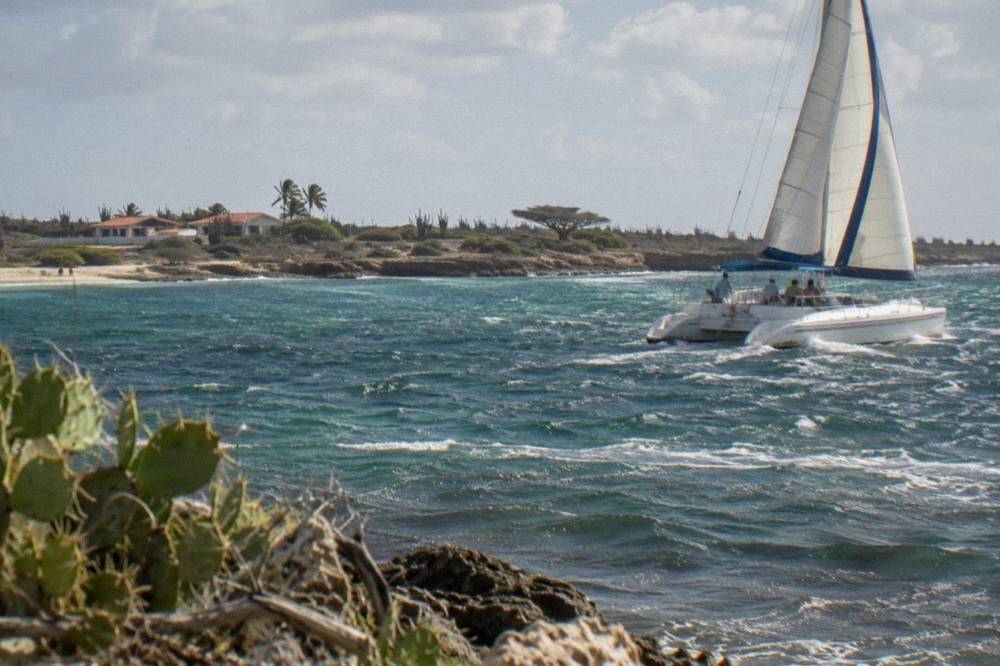
Wind shapes the photography more than cloud does. Strong trades ripple the water surface, which can either ruin a mirror reflection or add texture and spray to a bow shot. Wind speeds at their June peak average about 8.7 meters per second, around 17 knots, while October and November drop to about 5.8. If glassy water is the goal, late autumn is statistically the friendlier window, and the light is earlier and softer then too. The Departamento Meteorologico Aruba publishes the official marine forecast, and it is worth reading the morning of a shoot.
Rain is a smaller factor than visitors fear. Oranjestad's climate normals put October, November and December as the wettest months at 76.5, 87.1 and 80.1 mm respectively, against 8.6 mm in April, but even November averages fewer than ten rainy days. A passing shower at golden hour often improves the sky, since broken cloud catches color far better than a clean horizon. What you cannot plan around is a tropical wave: small-craft advisories do happen. The Aruba Tourism Authority's hurricane season page is the source to check between June and November, though the island has had no direct hurricane hit since 1851.
Sea temperature rounds out the picture at about 26 C in February to about 29 C in October, warm enough that sea spray and swim stops stay comfortable in every month.
How Do You Plan A Golden Hour Shoot From A Boat?
Work backward from the published sunset time for your exact date, arrive at the pier thirty minutes early, and treat the final twenty minutes before sunset as unmissable. Pick a two hour sailing whenever possible so you are on the water for the whole hour of warm light, and check the boarding point location before you book, since most piers sit on Palm Beach. When you are ready to pick the sailing itself, our guide to choosing and timing a sunset sail on your Aruba port day covers the boats, the open bars, and the piers closest to the ship.
A simple checklist keeps it stress free. Confirm the departure time on the booking page, not from last year's brochure. Check the marine forecast that morning. Charge batteries and pack a spare card, since a two hour sail gives far more keepers than the last ten minutes alone. Ask the crew about the planned route: the west-facing coast means the sun sets over open water from Palm Beach piers.
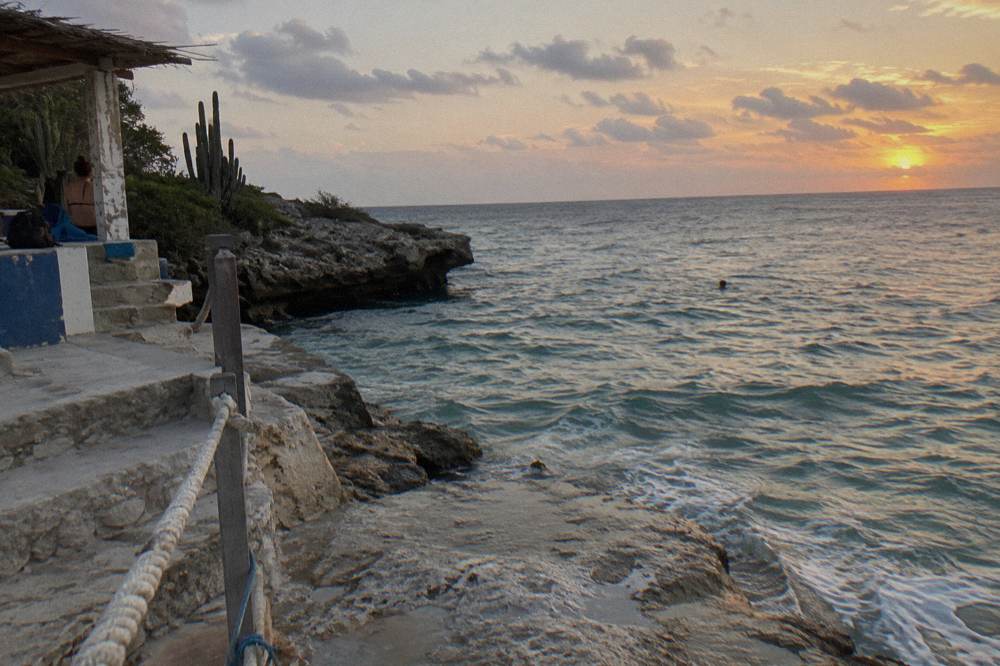
Pier logistics matter more than most people expect. Pelican Pier, De Palm Pier and MooMba Beach all sit within a short stretch of Palm Beach's hotel zone, an easy walk or short taxi ride from the high-rise resorts. Renaissance Marina in Oranjestad is about 0.4 km from the cruise terminal, so cruise passengers can reach a departure point on foot, though it is always wise to check your ship's all-aboard time before booking any evening sail. The site's guide to getting to a sunset cruise from Eagle and Palm Beach covers the transfer times in detail.
One more camera note: Aruba bans sunscreens containing oxybenzone, so bring a mineral formula for any swim stop.
Which Sailings Suit Photographers Best?
Small-capacity boats give the most room to move for shots, and the listings here range from a 12 guest small boat up to 80 guest catamarans. The Dolphin Catamaran shared sail carries up to 42 guests from $59 per person and is rated 4.6 from 897 reviews, while the Red Sail Sports sail with appetizers and open bar, the most reviewed listing at 4.5 from 2,406 reviews, carries up to 75 guests from $92 per person.
The trade off is space against amenities. A big catamaran has rails on both sides, a wide deck and an open bar, but thirty fellow passengers competing for the same rail shot. A small trimaran or schooner lets you change sides freely. If the photography is the point, book the smallest vessel that still fits your budget and group.
The large-format sail has one more advantage for shooters: a 75 guest catamaran is stable, and appetizer bites plus an open bar keep non-photographer companions happy during the slower first hour. It departs from Piet's Pier Bar on Palm Beach, with free cancellation listed.
For a tighter, quieter frame, the Delphi Watersports Dolphin Catamaran sail is a 45 foot vessel carrying up to 42 guests, departing from the beach in front of the Hyatt Regency in Noord, from $59 per person with drinks and snacks listed and free cancellation.
Either way, the timing math from the first table holds: match the departure to the month, not the habit. The listings below are three dependable ways to be on the water when the light turns.
Common Questions About Golden Hour In Aruba
What Time Is Golden Hour In Aruba?
Golden hour starts about an hour before sunset. Sunset in Aruba ranges from about 6:11 pm in mid November to 7:09 pm in mid July, so golden hour begins somewhere between roughly 5:10 pm in late autumn and 6:10 pm in early summer. Check the sunset time for your exact date and subtract an hour.
How Long Does Golden Hour Last In Aruba?
The useful warm light runs about an hour before sunset, and the strongest color sits in the final fifteen to twenty minutes. After the sun sets you still get twenty to thirty minutes of pastel afterglow, which many photographers find even better for wide shots than the sunset itself.
Does Golden Hour Change With The Seasons In Aruba?
Yes. In Aruba, sunset swings about 58 minutes across the year, earliest in November and latest in July, so match your sailing to the month.
What Time Do Sunset Cruises Depart In Aruba?
Most shared sunset sails are two hour trips timed to end at or just after sunset, with departures commonly advertised around 5:30 pm from Palm Beach piers. That suits the summer half of the year; in October and November the same departure still works, since the sun sets as early as about 6:11 pm. Always confirm the time on the live listing.
Is Golden Hour Reliable In Aruba Given The Rainy Season?
Largely yes. Aruba averages about 3,410 sunshine hours a year, and even the wettest month, November, averages fewer than ten rainy days. Broken cloud at golden hour often improves the sky rather than spoiling it, though tropical waves can occasionally trigger small-craft advisories between June and November.
Which Side Of The Boat Is Best For Sunset Photos In Aruba?
Aruba's cruises sail the leeward west coast, and the sun sets over open water to the west, so the port side is usually right when heading north and starboard when heading south. Crews typically turn the boat for the final approach; ask the crew which side will face the sun before the last twenty minutes.