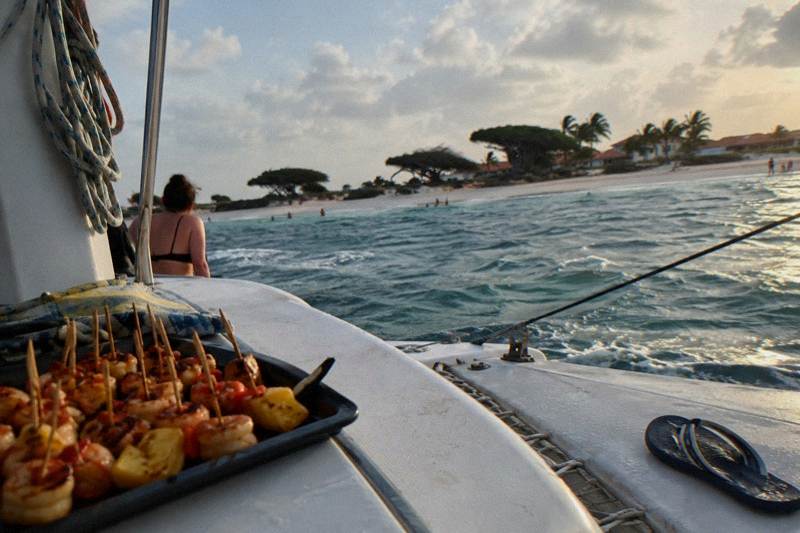
What To Wear And Bring On A Sunset Cruise In Aruba
Trade winds that feel pleasant at 5 pm can feel sharp two hours later on open water. Here is what to wear, what to pack and what to leave at the hotel for a sunset sail from Palm Beach, Noord or Oranjestad.
Short answer
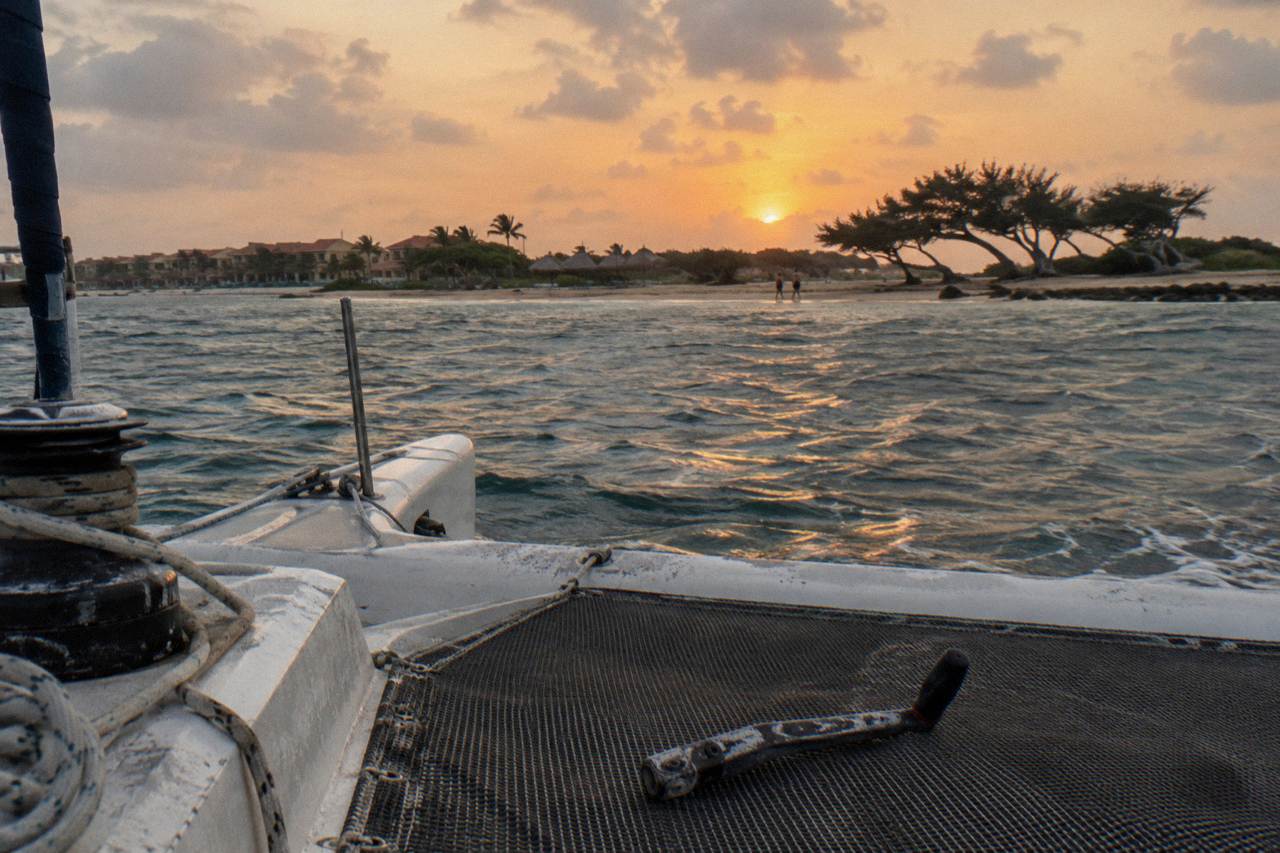
Wear a swimsuit under light layers, bring a cover-up or light shirt for the wind after sunset, and choose sandals or bare feet over hard-soled shoes. Aruba's sunset falls between about 6:11 pm in November and 7:09 pm in July, and shared two-hour sails typically cost from $50 to $114 per person depending on the boat.
Sunset in Aruba lands between roughly 6:11 pm in November and 7:09 pm in July, and almost every shared evening sail on the island is built around that window: two hours on the water, an open bar, and a run back to the pier in the dark. That last part matters for clothing more than most visitors expect. The east-northeast trade winds that make Aruba's beaches comfortable all day keep blowing after the sun drops, and on an open deck moving through the water they can turn a tank top and damp swimsuit into a shivering hour.
This guide covers what to wear, what to pack and what to leave at the resort, anchored to the real departure points: Pelican Pier and De Palm Pier on Palm Beach, MooMba Beach for the pirate sails, Hadicurari Fishermen's Pier, and Renaissance Marina in Oranjestad. Every figure here comes from the listings covered on this site or from official Aruba sources. For the broader question of which boat to book in the first place, the companion piece on the best sunset sail options in Aruba goes deeper than clothing.
What Should You Wear On A Sunset Cruise In Aruba?
Wear a swimsuit under light, quick-drying layers, with a cover-up, light shirt or light jacket you can put on after the sun goes down, and flat sandals you can slip off easily. Nothing on the covered listings requires dress clothing, and several actively work better barefoot. The wind after sunset, not the air temperature, is the thing you are dressing for.
The core outfit is simple: swimwear as a base layer, shorts or a light dress over it, and something with sleeves in your bag. Guests on the snorkel-and-sunset combos, such as the Spronk turtle sail that stops at the wreck and includes a BBQ dinner, will be in and out of the water in the late afternoon and then sitting on deck as the light fades, which is exactly the sequence that catches people out. Wet fabric plus moving air plus a dropped sun equals cold, even at 29 degrees sea temperature in October.
Cotton is the wrong choice for the base layer because it stays damp. A quick-dry swimsuit or rash guard keeps working after a swim stop. For the outer layer, a light long-sleeve shirt or a packable windbreaker handles the post-sunset breeze on the ride back. The mean wind speed at the airport runs 8.7 m/s in June, the strongest month, against 5.8 m/s in October and November, so summer sails carry a genuinely brisk apparent wind once the boat is moving, per the Departamento Meteorologico Aruba climate normals.
The listings themselves tell you the tone. The Jolly Pirates sunset sail advertises a rope swing, two restrooms and an open bar on a pirate-style schooner, which signals swimwear and active use of the boat. The Red Sail Sports dinner cruise serves a three-course buffet with an open bar on a luxury catamaran, which signals resort-casual but still nothing you would mind catching sea spray on. When in doubt, dress for the boat type, not the bar.
Do You Need A Jacket Or Cover-Up After Dark In Aruba?
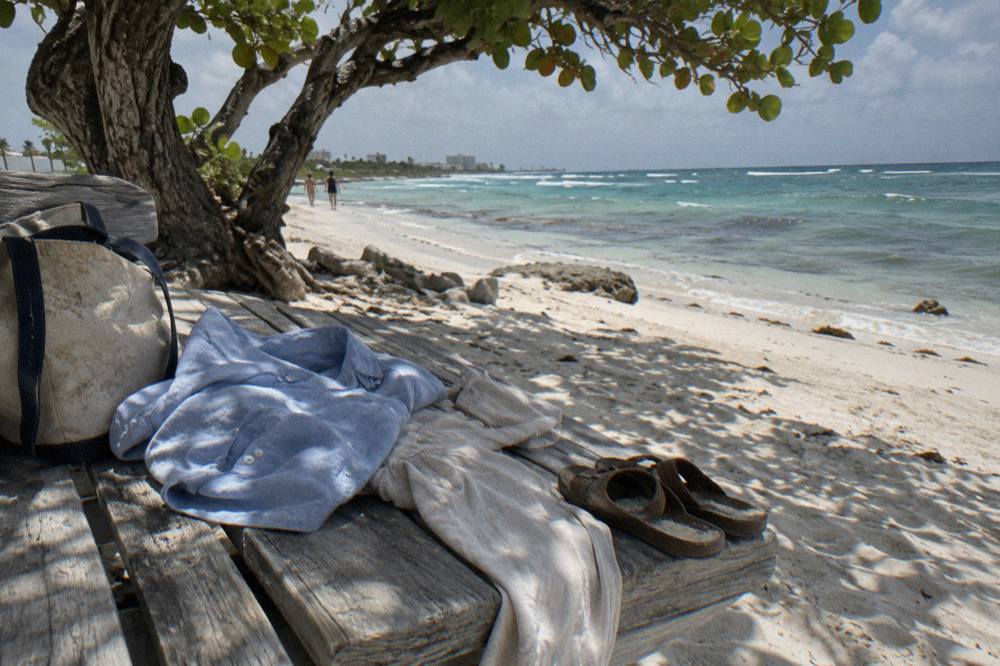
Yes, bring one even though Aruba is hot semi-arid and stays warm at night. The trade winds blow all year and boats create their own breeze while underway, so the effective temperature on deck after sunset sits well below the posted air temperature. A light jacket, wrap or long-sleeve shirt is small to pack and makes the return leg comfortable instead of something you endure.
The numbers explain the gap between expectation and reality. Aruba's mean daily maximum runs from 30.3 C in January to 33.2 C in August and September, and the island averages 3,410 sunshine hours a year. That is beach weather by any measure. But sunset slips earlier in winter, so a two-hour sail leaving around 5:30 pm can spend much of its second hour after sunset, moving through the trade wind plus the breeze the boat itself makes.
Wind chill is not an Aruba marketing phrase, it is arithmetic. October and November are the lightest wind months at 5.8 m/s monthly means, roughly 11 knots, and even then a catamaran under way into that wind puts every passenger in a stiff relative breeze. Add a damp swimsuit after a swim stop and the fix is obvious: keep a layer within reach for the sail back.
Practical choices that work on every covered departure:
| Item | Why It Earns Its Space | Best For |
|---|---|---|
| Light packable windbreaker | Blocks the return-leg breeze, weighs almost nothing | All sails, especially June through August |
| Sarong or long cover-up | Doubles as a towel and seat pad | Catamaran sails with a swim stop |
| Long-sleeve rash guard | Sun protection before sunset, warmth after | Snorkel combos like the Spronk turtle sail |
| Thin fleece or wrap | For dinner cruises where you sit still for a buffet | Red Sail and Pelican dinner cruises |
For travelers weighing a standard open-bar sail against a dinner version, the comparison piece on open bar versus dinner sunset sails covers the differences that affect clothing too: dinner cruises run three hours with more stationary seating, so the layer you bring gets more use.
The De Palm Tours two-hour sunset sailing excursion is a good example of the standard shape of the evening: catamaran, open bar, snacks, up to 80 guests, departing De Palm Pier on Palm Beach. It is rated 4.7 from 82 reviews, runs from $114 per person, and free cancellation is listed, so plans can shift with the weather. The same boat also appears as the Palm Pleasure open bar sail at from $112 per person. You can check availability once you know your date, and the pier is a short walk from most high-rise resorts.
What Shoes Work Best On Catamarans And Pirate Ships In Noord?
Flat sandals you can slip off, water shoes, or bare feet are the right answers. Many crews ask guests to remove street shoes on the trampolines and nets, and anything with hard soles, heels or slippery leather belongs at the hotel. Every departure point covered here, Pelican Pier, De Palm Pier, MooMba Beach and Hadicurari, involves walking on sand, a wooden pier or a wet boarding ladder.
Catamaran decks are a mix of fiberglass, netting and non-slip texture that punishes heels and rewards simple footwear. Flip-flops are fine for the pier but come off fast once aboard, which is why a pair of cheap sandals with a heel strap, or water shoes for the swim stops, is the dependable middle ground. The adults-only Flagship schooner sail out of Hadicurari Fishermen's Pier, which stops at the Antilla wreck and Boca Catalina, lists snorkel stops and a rope swing among its inclusions, and both are barefoot activities by nature.
The pirate boats deserve a specific note. The Jolly Pirates sunset sail out of MooMba Beach, rated 4.6 from 476 reviews at from $70 per person, lists a rope swing and two onboard restrooms, and its operator's own cruise page tells guests to arrive 30 minutes early for a 5:30 to 7:30 pm sail. Rope swings mean wet feet on a moving deck, so water shoes or bare feet beat sandals for anyone planning to use it. Note that no free cancellation is listed on this sailing, so outfit decisions should be settled before booking rather than after.
Families boarding at Pelican Pier have it slightly easier: the operator's sunset cruise page lists ages 4 and up, open bar and snacks, and the pier itself is a straightforward walk from the Palm Beach strip. A child who can manage their own sandals speeds up boarding for everyone.
What Should You Pack In Your Day Bag For A Palm Beach Departure?
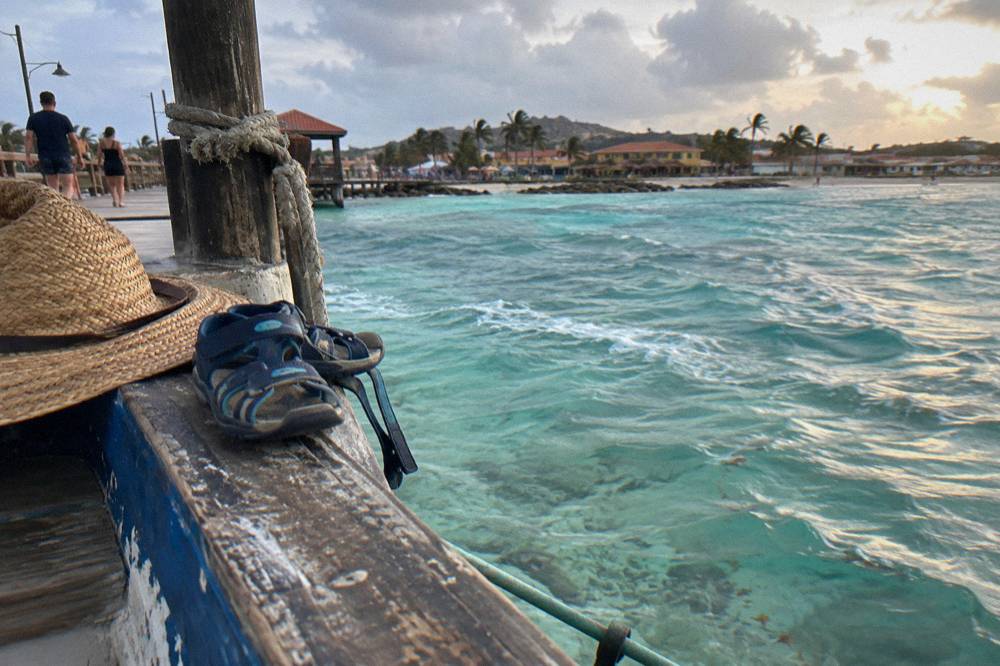
Pack reef-safe sunscreen applied before boarding, a towel, ID, a card or small cash for gratuities, a phone or camera, motion-sickness remedies if you are prone, and your after-sunset layer. Skip anything you would mourn overboard, because nets, rails and swings have claimed plenty of sunglasses, hats and loose phones over the years.
Aruba bans sunscreens containing oxybenzone, a rule in force since 1 July 2020 covering import, manufacture and sale, so a mineral (zinc or titanium) sunscreen is both the legal and the reef-sensible choice. Apply it before you leave the hotel rather than on the boat: most sails depart around 5:30 pm, the sun is low, and reapplying on a crowded deck is a losing battle.
ID matters more than visitors expect. Bring it, and remember the cruise operator sets its own age rules: the Pelican sunset sail lists ages 4 and up, while the Jolly Pirates dinner version is adults only. A card for onboard extras helps too: the adults-only Flagship schooner lists a premium bar upgrade available onboard for an extra charge, and the Octopus Aruba happy hour sail sells souvenir t-shirts on board.
The essentials, ranked by how often they get used:
| Item | Why | Notes |
|---|---|---|
| Mineral sunscreen | Oxybenzone is banned in Aruba | Apply before boarding, not on deck |
| Towel | Swim stops and damp seats | The snorkel combos all include water time |
| ID | Age checks and bar service | Adults-only sails check reliably |
| Light layer | The post-sunset wind | See the weather section below |
| Motion-sickness remedy | Swells on the north coast stops | Take it before boarding, not after |
| Cash or card for gratuities | Tipping is optional, never required | No fixed percentage applies to crews |
On gratuities: the Aruba Tourism Authority's own guidance says tipping is not mandatory, that some establishments add a service charge of roughly 15% for groups, and that anything extra is optional. It does not set a figure for boat crews, and this site does not either. A full discussion lives in the guide to tipping crew on Aruba boat tours.
What Is The Weather And Wind Like On Aruba Evening Sails?
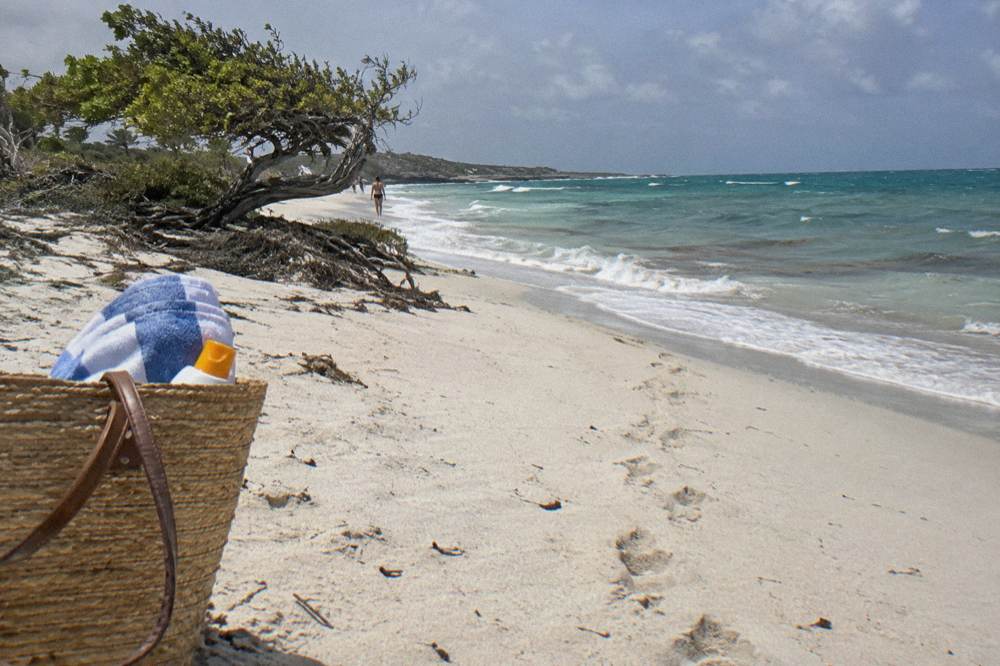
Expect warm air at departure, with mean daily maxima between 30.3°C and 33.2°C, plus a persistent east-northeast trade wind that is strongest in June and lightest in October and November. Aruba sits outside the hurricane belt with no direct hurricane hit since 1851 per the tourism authority, but hurricane season runs 1 June to 30 November and can bring gusts, rain or flat calm.
The monthly picture matters for packing more than for booking. January averages 44.0 mm of rain and about 10.8 rainy days of 1 mm or more; March and April average just 10.0 and 8.6 mm with about 2 rainy days each; the October-to-December stretch rises to 76.5, 87.1 and 80.1 mm. Even the wet months are dominated by short showers rather than washed-out evenings, but a light rain shell earns its spot in the bag from October through December.

Sunset time shifts the whole evening's shape. A July sail returns to the pier before full dark at a comfortable hour; a November sail leaves in daylight at 5:30 pm and lands with the island fully lit. The difference is about 58 minutes across the year. The dedicated sunset time by month guide has the full table.
The trades blow from the east-northeast all year, which is why the leeward west coast, where Pelican Pier, De Palm Pier and MooMba Beach all sit, stays sail-friendly while exposed coasts run rougher. Small-craft advisories do happen, so a booked sail can occasionally be rescheduled, and free-cancellation listings give room to move. The DMA marine forecast is the page crews themselves watch, and the deeper version of this discussion lives in the guide to rain and trade winds on Aruba boat tours.
What Should Kids, Couples And Adults-Only Sailors Wear?
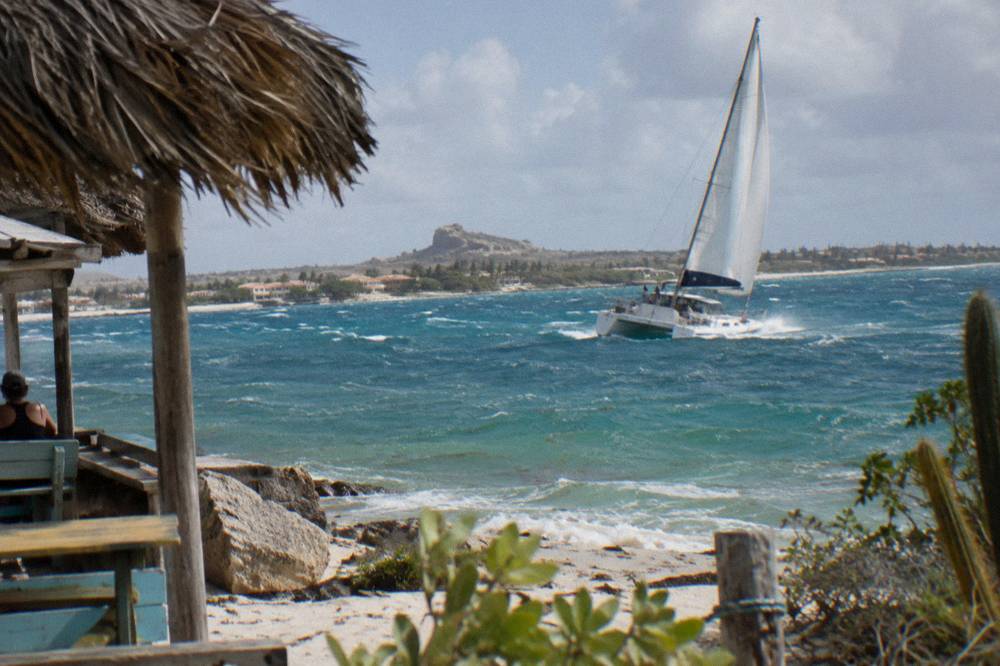
Kids need the same wind layer as adults plus a fitted hat and a dry change for the ride back; couples booking a private or dinner sail can go resort-elegant but should still avoid hard soles; adults-only sailors can plan around swimwear and rope swings without children in the picture. Every group should check its own listing's age rule before assuming who can board.
The family question is mostly a hat-and-harness question. Fitted caps survive the wind better than floppy sun hats, and a dry shirt per child solves the post-swim chill that ends evenings early. The Pelican family sunset sail lists ages 4 and up, and the Spronk turtle-and-BBQ sail carries up to 35 guests on a catamaran with SUP boards listed among the inclusions, so children old enough to paddle will end up wet. A full rundown of boats and ages lives in the sunset cruise with kids guide.
For couples, the ceiling is the dinner cruise set. The Red Sail Sports Caribbean dinner sail, rated 4.7 from 278 reviews at from $109 per person, runs 2 hours 30 minutes with a buffet and open bar, and the operator's published menu runs from mixed salad and grouper with creole sauce to keshi yena and chocolate mousse, with the sail operating Tuesdays, 5:30 to 8:00 pm. That is a sundress-and-linen-shirt evening, not a gown evening, and shoes still need to come off easily on deck. Anyone planning something bigger than a date should read the proposal on a sunset cruise guide, where the clothing advice converges on the same point: layers that photograph well and survive wind.
The adults-only options split by energy level. The Jolly Pirates grub-and-grog dinner sail, 4.9 from 60 reviews at from $125 per person, includes a barbecue dinner, a live DJ and rope swinging, which is active wear with a party finish. The Flagship schooner snorkel cruise at from $69 per person is quieter: a classic sailing vessel, snorkel stops and light bites, thin on reviews at one, so treat it as a new listing and lean on the inclusions rather than reputation. Swimwear under everything works for both.
What Not To Wear On A Sunset Sail From The Piers?
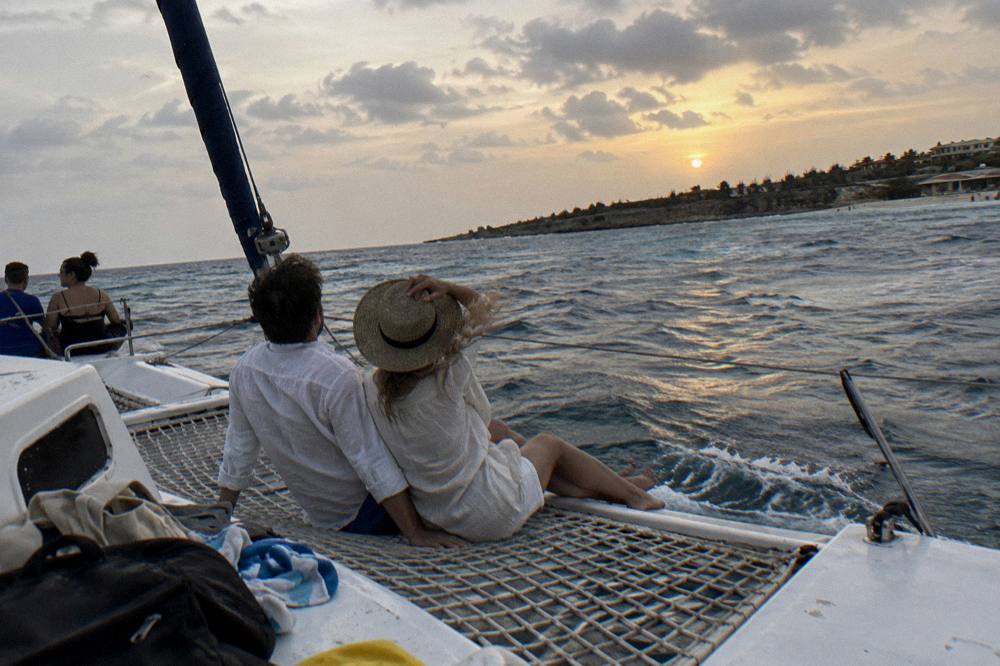
Leave behind heels, hard-soled dress shoes, heavy denim, expensive jewelry, fragile hats and anything you cannot afford to lose overboard. Do not count on hotel pickup for most departures: the covered listings overwhelmingly list no hotel pickup, so plan your walk or taxi to the pier, and arrive early enough to check in without running.
The footwear rule repeats because it fails most often. Heels are unsafe on any boarding ladder. Heavy jeans stay damp after a swim stop and stay cold in the wind, a double penalty for the weight.
Logistics shape the outfit too. Most of the covered sails depart between 5:30 and 6:00 pm from piers along the J.E. Irausquin Boulevard stretch of Palm Beach, close enough to the high-rise hotels that the walk is part of the plan, and the Renaissance Marina departures in Oranjestad sit about 0.4 km from the cruise terminal as the crow flies, an easy walk for cruise passengers who should still check their ship's all-aboard time rather than trusting a clock promise. Getting there is covered in detail in getting to your sunset cruise from Eagle and Palm Beach and the pier-by-pier guide for Pelican, De Palm and Hadicurari.
A short not-worth-it list, built from what the listings actually involve:
| Skip It | Reason |
|---|---|
| Heels or leather soles | Unsafe on ladders, banned on nets |
| Heavy denim | Stays wet and cold after swim stops |
| Expensive sunglasses | One gust over an open rail and they are gone |
| Bulky beach umbrellas or chairs | No deck space; these are working boat decks |
| Non-reef-safe sunscreen | Oxybenzone products are banned in Aruba |
One final practical note on booking: prices on the covered shared sails run from $50 per person on the Banana Adventure catamaran, which includes one-way pickup to the boat, up to $114 on the De Palm sailing excursion, with free cancellation listed on nearly every shared departure, so a weather-driven change of plan rarely costs anything if you book a listing that carries it. The full price landscape is mapped in the Aruba sunset cruise prices guide, and this site's Aruba Sunset Cruises homepage collects the current selection by category.
With the outfit settled, the remaining decisions are date and boat, and both are easier than the packing.
Common Questions About What To Wear On A Sunset Cruise In Aruba
Do I Need A Jacket On A Sunset Cruise In Aruba?
Yes, a light one. Air temperatures stay warm after dark, but the year-round trade winds plus the boat's own speed create a real breeze on deck, and damp swimwear makes it feel sharper. A packable windbreaker or long-sleeve shirt fits in any bag.
Can You Wear Flip-Flops On A Sunset Catamaran?
Flip-flops are fine for the pier and most crews simply ask you to take shoes off on nets and trampolines. Water shoes or strap-backed sandals are the better pick for sailings with swim stops or a rope swing, like the Jolly Pirates sunset sail.
Should You Wear A Swimsuit On A Sunset Cruise In Aruba?
If your sailing includes a swim or snorkel stop, yes, worn as a base layer under shorts or a cover-up. Standard two-hour open-bar sails from Palm Beach usually stay dry, but a swimsuit under your clothes costs nothing and keeps every option open.
What Time Does The Sunset Cruise Leave In Aruba?
Most covered departures board around 5:00 to 5:30 pm from the Palm Beach piers and MooMba Beach. Sunset falls between about 6:11 pm in November and 7:09 pm in July, so confirm your sail's time on the live listing.
What Should I Pack For A Sunset Cruise In Aruba?
Mineral sunscreen, a towel, ID, a card or small cash for optional gratuities, a light layer for after dark, and a motion-sickness remedy if you are prone. Leave behind anything valuable or fragile, and skip oxybenzone sunscreen since Aruba bans it.